Thursday, 15 January 2009

Playing in Style of Fender Stratocaster

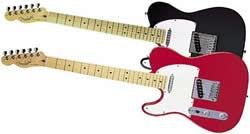
Customer Review: insight to signature fender telecaster styles/sounds
this video and the accompanying booklet provide great insight for the beginner or experienced player to the equipment spec's., and details of special tunings, chord-voicings and techniques of the most prominent and enduring telecaster driven superstars. i have not been able to find a second, or follow-up volume to this video (an effort well-warranted). nonetheless, if you're looking for a launching point from which to delve further into the playing of superstars like danny gatton, james burton, johnny lang, albert lee, kieth richards, and andy summers- this is money and time well spent.


As bands grew larger in the 30s and 40s, hence the term "the big band era", they got louder. Brass instruments are naturally loud and as these horn sections were added in strength to bands, who could hear an acoustic guitar over the din? As is usually the case necessity became the mother of invention and luthiers (guitar makers), engineers and musician's thoughts turned to finding a way to amplify a guitar's sound. Little did they know that the groundwork they laid would evolve into the modern technology of music made available today.

Initial attempts utilized microphones attached to hollow body guitars but the volume needed just could not be produced. In 1931 the Electro String Instrument Corporation created an electric guitar using tungsten pickups. It was called a Rickenbacker named after one of the company's owners, Adolf Rickenbacher. He changed the spelling of his last name to Rickenbacker partly because his cousin was the famed World War I combat ace Eddie Rickenbacker.

In the 1940's two of the most famous names in the electric guitar's history, Les Paul and Leo Fender, created their versions of this modern day instrument. Les Paul worked for the Epiphone Guitar company and in his spare time experimented with various electric guitar designs. Through the years the solid body Gibson Les Paul has become a mainstay of many rock guitarists instrument arsenals. The Fender Guitar company began with the Esquire, a solid body with a single magnetic pickup, followed with a two pickup model, the Broadcaster, whose name was changed to the Telecaster and in 1953, the Stratocaster was introduced.

Through the years many different models and designs of the electric guitar have appeared. Some mindbogglingly expensive and some quite affordable. There is also a wide variety of special effect devices and amplifiers to choose from. One of the coolest designs I've seen is the double neck electric six and twelve string used by Richie Sambora of Bon Jovi in the song Wanted Dead or Alive. Gibson also markets a Jimmy Page Signature double neck guitar.

One of rock's most prolific guitar owners is Rick Nielsen of Cheap Trick. He owns a custom made five neck, yes you heard right, five neck guitar built by Hamer Guitars and has owned over 2,000 guitars at one time or another. I'm still working on mastering a single neck and this guy's on five. Amazing talent.

Whether you're into rock or jazz, folk or country, acoustic or electric, here are some of my favorite learn to play guitar courses. Check them out at http://www.reviewsbytheigmonster.com/

aluminium fender stratocaster

Wednesday, 14 January 2009

got blues? Men's tee Shirt in 12 colors Small thru 6XL

Customer Review: Excellent to do business with in every way
These guys are great to deal with. I had a very minor issue which was NOT their fault, and they went above and beyond to fix it. I would be happy to do business with them again any time.... and I hope you do as well. thank you 99volts!


Metallica's lead guitarist, Kirk Hammett, was listed as number 11 on Rolling Stones list of the 100 Greatest Guitarists of All Time. While playing with Metallica, Hammett contributed to many songs that were huge hits, developed some killer riffs and earned himself and his band seven Grammy awards. Metallica is considered one of the best-known heavy metal bands and has produced many hugely popular albums, including its self titled album that sold 15 million copies. Four of Metallica's albums reached number one on the Billboard 200 and their combined record sales for all the albums are somewhere around 95 million. If you are a guitar player and would love to replicate Kirk Hammett's rock star success, take some tips from the man himself.

Hammett possesses a true love for playing the guitar and for music in general. This might explain why he claims to play his guitar 361 days out of the year. If you are looking for guitar tips from Hammett, the first one is to practice obsessively. Hammett started playing the guitar when he was 15 with an unimpressive guitar that he got from a Montgomery Ward catalogue. He decided he needed an amp to go with his guitar so he made one out of a shoebox and a four-inch speaker. Eventually, he got a job as a dishwasher at Burger King to finance his musical inclination. It wasn't too long before Hammett was able to upgrade to a Fender Stratocaster, and then moved on to his favorite of all time, a 1974 Gibson flying V. Another hint from Hammett is that you don't have to be in possession of the best equipment available. You just have to start somewhere and work with what you have until you get better and can upgrade. Hammett definitely didn't start out with the fanciest music gear, but his love of music and playing the guitar kept him going.

Hammett is a man who is constantly curious and interested in learning new things. He is quoted as saying "a life lived unexplored is a life not worth living." This character trait played out well for him on a few levels in his guitar career. His curiosity kept him experimenting with different techniques on his guitar in a quest to develop something truly unique. This brought about the "Frankenstein" technique that Hammett invented by using different pick-up and amp combinations. After Hammett joined Metallica, his desire to learn and explore gave him the motivation to join the ranks of some other guitar greats and take guitar lessons from Joe Satriani. This was a great move for his career because it bettered his skills as a well-rounded musician when he learned to play jazz, classical and blues from Satriani.

Lastly, Kirk Hammett is a humble guy. One night at 3:15 in the morning when he was touring with Metallica and staying in a hotel room, he composed the famous riff that is included in Metallica's most popular single "Enter Sandman". "Enter Sandman" was the first single from Metallica's self-titled album, which sold 15 million copies. Hammett could have considered himself a big time, accomplished musician at this point and stopped trying to improve his craft. However, even after Metallica's huge success, Hammet had the humility to admit that there was plenty more that he could learn about guitars. He enrolled in guitar classes at the local city college in San Francisco to continue improving his skills and working on his craft.

Overall, Kirk Hammett is a passionate guitar player who is consistent with his practice and devoted to learning and improving his skills. He remains humble even after the great success of his band and his music. These traits combine to make Kirk Hammett one of the greatest guitar players of all time.

Stop wasting money on 1-on-1 guitar lessons! Check out Steve Krenz's Learn & Master Guitar, it beats the pants off anything out there. It's the most comprehensive and thorough instructional guitar course available today. Advanced guitarists should check out http://www.madguitarlicks.com for 35 killer licks to add to their arsenal.

aluminium fender stratocaster

Fender Standard Stratocaster Electric Guitar - Maple, Black

Electric Guitar. Made by Fender.

No other guitar can match it -- the Fender Stratocaster is where the great guitar tradition began and still carries on today!

Featuring a fast-action maple neck, comfort-contoured body, three single-coil pickups and standard synchronized tremolo, the Fender Standard Strat is the guitarist's guitar! Pick one up and you hold the whole history of rock and roll in your hands...

Features

  • BODY Alder
  • NECK Maple, Modern "C" Shape, (Satin Polyurethane Finish)
  • MACHINE HEADS Fender/Ping Standard Cast/Sealed Tuning Machines
  • FINGERBOARD Maple, 9.5" Radius (241 mm)
  • NO. OF FRETS 21 Medium Jumbo Vintage Style Frets
  • PICKUPS 3 Standard Single-Coil Strat Pickups (Ceramic Magnets)
  • CONTROLS Master Volume, Tone 1. (Neck Pickup), Tone 2. (Middle Pickup)
  • BRIDGE Vintage Style Synchronized Tremolo
  • PICKUP SWITCHING 5-Position Blade: Position 1. Bridge Pickup, Position 2. Bridge and Middle Pickup, Position 3. Middle Pickup, Position 4. Middle and Neck Pickup, Position 5. Neck Pickup
  • HARDWARE Chrome
  • STRINGS Fender Super Bullet 3250L, Nickel Plated Steel, (.009 to .042)
  • PICKGUARD 3-Ply White
  • SCALE LENGTH 25.5" (648 mm)
  • WIDTH AT NUT 1.650" (42 mm)
  • UNIQUE FEATURES Vintage Styling
  • ACCESSORIES Includes Fender Gig Bag

NOTE: The picture on this page shows a gutiar with a Rosewood neck, if you order from this page you will receive this same model guitar with a Maple neck


The following is a list of the 4 best guitar solos ever to be played... well, at least in my opinion anyways.

I had the hardest time writing this because with all of the amazing music in the world, how the heck do you pick the top 4? What was even harder for me was to put them in order!

I have been working on this for days now and even though I have whittled the list down to 4, I still couldn't decide on the order to place each song in. So instead of numbering them from 1 to 4, I decided just to tell you my favorite and leave the rest of them un-numbered. I know, I know... I wussed out! But sit down and try it yourself someday and then see how hard it is.

You probably wont agree with my choices and that's ok because we all have different tastes. In fact, if everyone agreed with my picks, I would be worried. That's the beauty of music... we love what we think sounds good, what makes us feel good and what makes us jump out of our chair and play some air guitar.

Could you imagine if we all felt the same, liked the same music and had the same opinions? How boring would that be?

So here are my choices, the songs and guitar solos that send shivers up and down my spine every time I hear them. If you don't agree, that's ok. These are my picks... go make your own ;-).

My favorite guitar solo of all time:

Eruption by Van Halen:

Written and performed by Eddie Van Halen on the Van Halen album. I picked this as my favorite of all because it's the one that I always, no matter where and when I hear it, have this urge to play some serious air guitar. I remember being blown away the first time that I heard this because a sound like that was never heard before. That one song inspired myself and many other young kids to pick up the guitar.

The strangest part of this track was that it wasn't even supposed to be on the album. Eddie was in the studio practicing one of the solos that he liked to do live because he had a gig on the weekend. His producer walked in and heard him playing and told him that he wanted to put it on the album. They recorded one take of the solo and that's what you hear on the album.

Honorable mentions:

Freebird by Lynyrd Skynyrd:

Starting off as a ballad, Freebird then turns into an up-tempo guitar boogie. My favorite parts of the song are the slide guitar solo at the beginning and the 3 guitars that solo for nearly a full 5 minutes at the end of the song.

Another cool fact about this song is the lyrics at the start of the song. "If I leave here tomorrow would you still remember me?" was a question that a girlfriend of Skynrd guitarist Allen Collins asked him when she realized that music would always come before her in his life. Allen wrote those lyrics down and then were used in Freebird and recorded on their Pronounced Leh-nerd Skin-nerd album.

All Along The Watchtower by Jimi Hendrix Experience:

Jimi took a tape of the Bob Dylan song into the studio one day and immediately started recording a bunch of takes. Becoming more dissatisfied as the song went on, Jimi kept overdubbing more and more guitar parts. When you sit down and listen to the finished version, which is on the Electric Ladyland album, it's hard to imagine that this song started out as an acoustic ballad.

Stairway To Heaven by Led Zeppelin:

From the famous Led Zeppelin IV album, this is the song that you usually see at the top of all of the "best guitar solos" lists. When you see videos of this song being played, you will see Jimmy Page playing a double neck Gibson guitar during the song. When recording the song for the album, Jimmy actually used a 1958 Fender Telecaster, Harmony acoustic guitar and Fender Electric 12-string.

Another interesting fact about "Stairway" was that it never was released as a single, which turned out to be a great marketing move. Just to get their own copy of "Stairway", fans were more than willing to shell out the cash for the whole album. It was a great investment anyways because the entire album is amazing.

There you have it, in my humble opinion, the 4 best guitar solos of all time. I have a much bigger list that I could have revealed here but because this is an article and not a book, I have kept it down to 4. Plus it really doesn't matter what my choices are, anything that I would have picked wouldn't be able to do justice to all of the great guitar players in the history of modern music. I'm just grateful that I've had the chance to experience all of their music.

"Teach Yourself Guitar The EASY Way" - grab your FREE report that Reveals "How to Avoid the Top 7 Mistakes That Most Beginners Make When Buying a Guitar Learning Product"

http://teach-yourself-guitar.com/freereport

john mayer fender stratocaster

Monday, 12 January 2009

Starlicks Sessions With Les Paul: Instructional Guitar Video

This Les Paul instructional video represents a rare and historical in-depth view of the living legend that inspired the revolutionary development of the recording industry. Les not only invented the electric guitar, he also perfected the technique of multi-track recording and experimented with the use of "echo", what we now refer to as "reverb"


Very talented Contemporary Country artist Vince Gill has released him latest CD titled I Still Believe In You and Wow! It's good.

I Still Believe In You literally grabs your attention right from the start with Don't Let Our Love Start Slippin Away and doesn't let go until the very last note of the very last song I Still Believe In You, which is another great track by the way.

The nice thing about a CD like this is when the talent is this rich even if Contemporary Country isnt your favorite style you still cant help but appreciate the greatness of the artist.

Im of the opinion that I Still Believe In You is certainly Vince Gills best work in a few years. A totally enjoyable CD and an outstanding release. What I call must have music. I give it two thumbs up because its a collection that even the casual Contemporary Country fan can appreciate and enjoy.

While this entire CD is outstanding the truly standout tunes are track 1 - Don't Let Our Love Start Slippin Away, track 6 - One More Last Chance, and track 10 - I Still Believe In You.

My Bonus Pick, and the one that got Sore [...as in "Stuck On REpeat"] is track 9 - Love Never Broke Anyones Heart. What a nice track!

I Still Believe In You Release Notes:

Vince Gill originally released I Still Believe In You on September 1, 1992 on the MCA Nashville label.

CD Track List Follows:

1. Don't Let Our Love Start Slippin' Away

2. No Future In The Past

3. Nothing Like A Woman

4. Tryin' To Get Over You

5. Say Hello

6. One More Last Chance

7. Under These Conditions

8. Pretty Words

9. Love Never Broke Anyone's Heart

10. I Still Believe In You

Personnel: Vince Gill (vocals, guitar); Andrea Zonn (vocals, fiddle); Randy Scruggs (acoustic guitar); Steuart Smith (electric guitar); John Hughey (steel guitar); Steve Nathan (organ); Pete Wasner, John Barlow Jarvis (keyboards); Willie Weeks (bass); Carlos Vega (drums); Vicki Hampton, Bob Bailey, Yvonne Hodges, Kim Fleming, Harry Stinson, Billy Thomas, Dawn Sears (background vocals).

Comcast Deals

fender stratocaster hss

Saturday, 10 January 2009

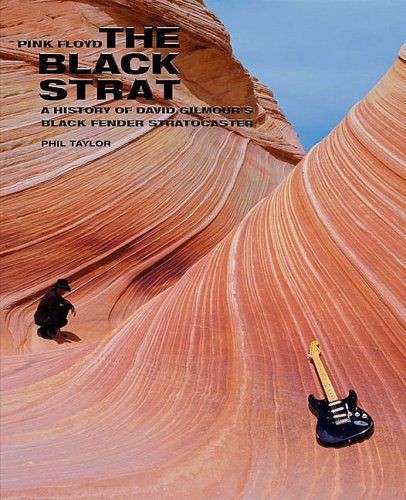
Pink Floyd: The Black Strat: A History of David Gilmour's Black Fender Stratocaster

The Black Strat book is the first and only accurate and knowledgeable account of David Gilmour's favorite Stratocaster guitar. Written by Phil Taylor - David's personal guitar technician since 1974 - to coincide with the release of the long awaited and much requested Fender 'David Gilmour Signature Strat': an instrument replicating the look, set-up, sound and feel of David's famous black guitar as it is today. The chronological story begins with David Gilmour joining Pink Floyd in early 1968, his guitar at that time, his subsequent instruments leading to the purchase of the Black Strat in 1970, and the other guitars that have come and gone. The book details all of the changes and modifications made to the Black Strat, its use on Pink Floyd tours and iconic albums, David's solo projects, and various guest appearances throughout the years.
Customer Review: Pink Floyd: The Black Strat A history of David Gilmour's Black Fender Stratocaster
After reading this book in one sitting, it became an inspiration for me to build my own Gilmour black strat. It is a must for any fan of Pink Floyd as well as David Gilmour fan. A very detailed history of the guitar and it's owner and the various changes the guitar went through 'til it reached its current state. A wealth of pictures as well as info, so much as i said that i built my own gilmour strat. The only changes i made were in the neck, it is a C-shaped but a bit smaller to fit my hand, i did put a duncan ssl5 in the bridge, but instead of the fat 50's in the neck and 69 in the middle, i put 2 duncan ssl-3 in the neck and middle but the middle pickup is reverse wound, and instead of drilling a hole in the pickguard for the extra switch to turn on the neck pickup, i used a push-pull pot on the lower tone control to add the neck pickup. I decided to do the N.O.S version instead of the relic'd version. See if this book had that kind of inspiration for me, imagine what it may do for you. Go out and get it, enjoy yourself reading it, even if you don't build guitars.
Customer Review: David Gilmour's Black Strat-GRN
I, at first, scoffed at this story of David Gilmour's Black Strat; however, the more I thought about it, the more I believed that it would offer something of a storied journey. This proved to be a good historical read and journey of not only David and Phil Taylor, Daivid's Guitar Technician, but also of the journey of the Black Strat and several other Floydian Guitars. I am glad that I purchased and read this account.


If you've been hearing the buzz on Urge recently, it's not about a deep desire or compulsion - it's about MTV's offering to the world of online music downloads and streaming.

Urge is a subscription based music download service in which its patrons can subscribe for a monthly fee of $10 and listen to as many of the 2 million songs in MTV's coffers as they like. If they'd like to download that song, then it costs 99 cents each.

But it's not just MTV behind the latest addition to the world of online music. Microsoft and MTV are working together on this one. Bill Gates must have seen the success of similar sites like Napster and Rhapsody and decided to jump on the bandwagon. Urge's challenge will be to convince all those music lovers who prefer to buy songs and download them through sites like the incredibly popular iTunes, owned by Apple computers, that subscribing to a site and being able to listen to whatever songs you like, in whatever order and as often as you like is just as good or better than buying them one by one. It's just one more battle to add to the long running conflict between Microsoft and Apple.

Does Bill have anything different to offer through Urge? Anything that makes this latest venture stand out from similar sites? Not really. Should you choose to become an Urge subscriber, you won't find any music that you wouldn't find on any other download - subscription site. The prices are even pretty much the same.

What they do offer is a aesthetics - their site looks good. Plus, there's the camaraderie. Subscribers can post on blogs and converse with one another. But that's about it.

But with Microsoft powering the marketing and advertising engine behind Urge, it's sure to do well. Even the latest incarnation of Microsoft's Windows Media Player has Urge built in. Everyone with a PC has access to this free player and therefore easy access to Urge.

What PC users won't have is the portability provided by the wildly popular iPod. Current owners of iPods, should they decide to subscribe to Urge, will have to buy songs through the site, download them, burn them onto CDs and then convert the music files to mp3s in order to be compatible. Other portable devices are compatible with the service, however, and those are listed on the site.

This all may change in the Christmas of 2006, as buzz indicates Microsoft plans to release their "iPod Killer". Based on the Xbox brand, and including additional features like gaming, this media player is aimed right at Apple's heart, and could quickly make "Urge" a household name, assuming the two products are closely linked.

Each of the music download sites has their own strengths and weaknesses. Urge fully divides and subdivides genres so that its subscribers can easily find what they're looking for while exploring other bands that they might like. Yahoo Music Unlimited personalizes the start page to include suggestions based on the subscribers previous downloads and offers a cheaper subscription rate. Rhapsody has the best radio services, providing specialized stations that stream a pre-set list of music.

If you can't decide, then try one or try them all. Each of them offers a free trial subscription. You can experiment with all of them and decide which one suits you best.

Madison Lockwood is a customer relations associate for ApolloHosting.com. She brings years of experience as a small business consultant to helping prospective clients understand the ways in which a website may benefit them both personally and professionally. Apollo Hosting provides website hosting, ecommerce hosting, vps hosting, and web design services to a wide range of customers. Established in 1999, Apollo prides itself on the highest levels of customer support.

fender highway one stratocaster revie

Friday, 9 January 2009

Starlicks Sessions With Les Paul: Instructional Guitar Video

This Les Paul instructional video represents a rare and historical in-depth view of the living legend that inspired the revolutionary development of the recording industry. Les not only invented the electric guitar, he also perfected the technique of multi-track recording and experimented with the use of "echo", what we now refer to as "reverb"


Every guitar player has a certain guitar they dream about owning. Whether it's a Gibson Black Beauty or a 1961 Stratocaster. However, the problem of finance often gets in the way. One solution to this problem is to buy a damaged guitar and work on restoring it. As well as being a way to get your hands on your dream guitar at a reasonable price, it is also a very satisfying project to undertake.

This article will give you a few pointers on how to get started.

Locating Spare Parts

This used to be the hardest part of restoring a guitar. Before the web, you had to get very lucky in order to find the right parts. Nowadays, a quick search on Google will often turn up exactly the part you need. It doesn't matter how obscure it is - there's a good chance someone, somewhere will be selling it.

Repairing the Body

The body of the guitar often gets chipped and scratched over time. You may want to strip the original finish off the guitar an refinish it. Don't. The finish itself is valuable. The big guitar makers go to great lengths to perfect their finishes. It's unlikely you'll be able to reach the same quality as the original. A guitar with the original finish, even scratched and chipped, is worth more than a refinished guitar.

Repairing The Neck

It is possible to fix a guitar neck that is cracked and warped. Guitar necks often start to crack at the where the headstock meets the neck. One quick solution is to pour hot glue into the crack. However, this is not the best long term solution. Breaking off the headstock altogether, although very nerve-wracking, does allow you to ensure that the glue fully gets into the crack and the problem will not reoccur.

The neck will usually be the dirtiest part of the guitar. Give it a good clean with a toothbrush and wood cleaner. Allowing it to soak in boiling linseed oil will really add a shine to the neck.

Other Parts

Again, you may be tempted to replace worn knobs, frets, tuning pegs etc. with new ones. It is not always advisable to do this. If you are able to restore the originals to reasonable condition - do this. If not - try to replace them with parts from the same make and model of guitar from the same era.

Adding Parts

When restoring an old guitar, some people are tempted to customize it with new features e.g. a whammy bar. How advisable this is depends on why you are restoring the guitar. If you are restoring it solely for your own enjoyment - then go for it. If you intend to sell it at any point, making modifications will reduce the value of the guitar.

Restoring a classic guitar is a very rewarding pursuit. I hope this article has set you off on the right foot.

Al Wood has a resource for finding spare parts for Fender guitars, spare parts for Gibson guitars and low priced guitars.

counterfeit guitars fender stratocast

Thursday, 8 January 2009

Starlicks Sessions With Les Paul: Instructional Guitar Video

This Les Paul instructional video represents a rare and historical in-depth view of the living legend that inspired the revolutionary development of the recording industry. Les not only invented the electric guitar, he also perfected the technique of multi-track recording and experimented with the use of "echo", what we now refer to as "reverb"


Finding the right electric guitar for what you want to do with it is important and can be confusing if you do not know much about guitars. To avoid spending too much money, do some careful shopping around before you buy. This will allow you to get familiar with some of the prices out there, and what you should expect to get for a certain amount with the features you are looking for. This will also allow you to become familiar with what the different brand names are as well as different models available.

Often times you can save a huge amount if you buy a used guitar. Actually play it and see if you like the sound it makes. Listen for any string buzz; this can be a sign that it just needs a simple adjustment in the way that it is setup. Sometimes if you are buying from a reputable seller they will offer to make any necessary adjustments for you, if not then the cost to have a guitar properly setup is not very much money at all.

If you plan on playing in a band as a guitarist, then you will probably be standing up with the guitar strapped over your shoulder for long periods of time. You will probably not want to buy one that is too heavy, this is important if you do not want to develop any back problems! If you will just be practicing in your room while you are learning how to play, then the weight of the guitar is not going to be so much of an issue.

If the guitar feels right to you then the first step has been accomplished. Next, how does it sound to you? Are you able to get the exact sound that you imagined you could get from it? If you think it is close to the sound you want then you could always make slight adjustments to the amplifier. Many people like the sound of the electric guitar being played through an amp on clean settings. This is when there is no overdrive or distortion set on the amp. This is often good for arpeggiated parts or strumming rhythm much like you would do with an acoustic.

The materials may or may not play an important role in getting the sound you want. Obviously the higher the quality of materials used to build the guitar, the higher the price will be. Some guitars built of lesser quality can actually produce the exact sounds you are looking for. You do not have to have the very best in order to sound great!

Some people prefer the sound of the electric guitar through the overdriven or distortion settings of the amp. This actually thickens up the sound a lot and will often mask mistakes! It is a whole lot easier to sound like a good guitar player through distortion that it is with no distortion. Most amps offer an almost unlimited variation of settings that you can make. Often it is as easy as the push of a button to turn the distortion on or off. You should also be able to dial in just the right amount of reverb for the style of music that you want to play.

Over time you will learn lots about guitars. Who makes the really desirable ones and which ones work best for which particular style of music. For instance you may want to play country music. A Fender telecaster, or a Fender Stratocaster through a Fender amplifier set on the clean settings is the classic way to apply the country style guitar playing. Adding a bit of compression in the form of guitar effects processing will give even more of a very controlled country music sound.

Find lots of new and vintage guitars for sale. Learn something new with free guitar tabs.

Randy Carter is a guitar guy who loves to share information about guitars. As a freelance writer he reaches hundreds of readers every day.

fender highway one stratocaster revie

Wednesday, 7 January 2009

Fender Stratocaster Mouse Pad

Made in the USA! This mouse pad is shaped like the real guitar! Looks great and is still very practical.


Depending on the kind of music you like to play would determine as to what kind of guitar you would choose to purchase from the many different varieties that are available on the market today. It is essential, however, that the guitar that you select feels comfortable to you. If you are a person of a small build, then you will require a guitar that fits your build, whilst if you are a person with very long arms, then a small guitar simply would not be suitable. The weight of the guitar that you select is another important factor. This is because, if you will be playing the guitar a great deal, then you will not wish to feel weighed down by an instrument which is far too heavy for your strength.

Other factors which need to be taken into consideration when selecting a guitar is the sheer look of it, as well as the sound that it gives off. Guitars are available in a wide range of different shapes, colors and finishes. Every single guitar will have a slightly different sound and the quality of sound very often depends upon the quality of the guitar.

If classic music is what you enjoy playing, then you will require a guitar with nylon strings. The back and sides of the guitar will usually be made of rosewood, with spruce or cedar for the top. The guitar that is used for playing flamenco is similar, only with the wood being thinner and the body of the guitar shallower and made of cypress with a cedar top.

The classic guitar which has a hollow body and nylon strings, and the electric steel guitar with its solid wood body, bottled neck and steel strings, such as the very popular Fender Stratocaster are the two most popular types of guitar. Of course, there are many variations within each type. The semi-acoustic and the semi-solid are just two of them. Then of course there are the bass guitars. However, when purchasing a guitar for the first time, the main selection will be between electric and acoustic.

It is worth considering purchasing an acoustic guitar if you have never played before. This guitar is much simpler to play and nothing else is required to accompany it, apart from a case, strap, some picks, and sheet music, all of which are available at an inexpensive price. If you choose to purchase an electric guitar, then you will also need to purchase an amplifier and at least one effects box. This can of course increase the overall cost dramatically and make the selection more difficult.

Even though it is not necessary to spend huge amounts of money on your first guitar, it is never recommended to buy the cheapest available simply because you are not sure if you will continue to play. For this reason, it is worth taking every opportunity to have a play with friends' guitars or with those in shops before you make a purchase decision. It is not necessary to purchase one of the top brand names; there are plenty of guitars available with no brand name attached to them.

Always ensure that the guitar you select is well made. This can be done by running your fingers around the seams. If you can feel as though any part is coming apart or if it feels rough, then do not buy it. Ensure that the frets are even and the top is not made of plywood. It is never wise to rush out and buy the first guitar that you see. Select a guitar carefully from the many different ones that are available on the market today.

Kevin Sinclair is the publisher and editor of MusicianHome.com, a site that provides information and articles for musicians at all stages of their development.

aluminium fender stratocaster

Tuesday, 6 January 2009

Fender '62 Stratocaster 11 Hole Pickguard - Tortosie Shell

Guitar Replacement Pickguard. Made by Fender.

4-Ply, 11 Hole Stratocaster Pickguard for 3 single coil pickups

Fits: '62 American Vintage (U.S.) and 60's (Mexico) Stratocasters. Has truss rod adjustment notch.


You might think of buying used instruments from a pawnshop, classified ads or Ebay. If you have the money then you might as well drop the idea because electric guitars are supposed to be expensive for you to get the quality you deserve. However, if you're on a budget, you may still need necessary precautions in buying used guitars. The key here is if you can't try it, don't buy it. And "trying" means that you have someone in tow who is experts in guitars to avoid being ripped off.

Before heading to the music store, you should already have an idea as to what kind of music you would like to play on your electric guitars. Guitar makers model their guitars with an icon they saw best using it that's why guitar models are usually named after guitar legends. If you are someone who likes to play the country, folk rock genre, then choose a Telecaster. For metal-heads and heavy rockers out there, they keep their eyes on the Jackson, Ibanez, and B.C. Rich. Stratocasters are the most flexible amongst all electric guitars and thus best fits a beginner who is still undecided on musical genre. Stratocaster is a safe choice so you might want to get one of these babies.

Having said that, you have to choose the right brand which is, basically, all the familiar brands you hear - Fender, Gibson, Ibanez, Epiphone, etc. These are the names who sell reasonable prices for beginners. Choose between Fender and Gibson, they have a line dedicated to aspiring guitarists and you could never go wrong with these brands. You can also consider some unknown brands as long you have a friend expert recommending it to you. But if you're on your own, be on the safe side with the familiar brands.

May it be a Fender or a Gibson you choose on buying, don't walk away from the store without trying out a few stock. You chose a trusted brand, yes, but to hear is to believe. Listen and choose the best sound.

It's always best to bring a friend with you to get expert opinion. This will also make you feel more secure in buying your first electric guitar. And of course, don't forget the amps.

Now there you have it, your first step to being a guitarist is done. You may now proceed to the learning process by visiting http://freeguitarguide.googlepages.com/ and see yourself bringing the house down overnight!

fender highway one stratocaster revie

Monday, 5 January 2009

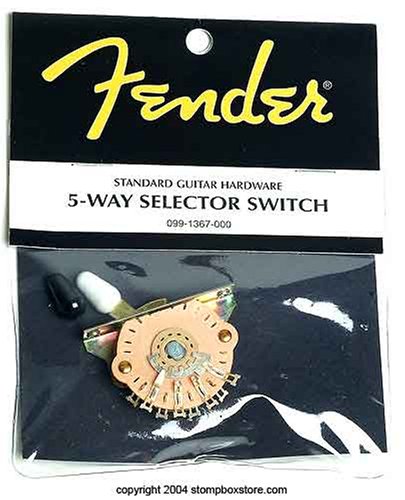
Fender 5 Way Pickup Selector Switch for Stratocaster

no description data


Youve made the decision to take up the guitar, but arent exactly sure how to use it. This lesson is the perfect place to start your guitar career. Youll learn all about Electric and Acoustic guitars, their parts and the slight differences between the two.

Lets start with the body of the Acoustic and Electric guitar. This is where any electronic hardware (such as in the Electric guitar) is located. The Acoustic guitar, unlike the Electric, has a sound hole. This is where the sound that you hear comes from when you hit a string. A sound hole serves to amplify the vibration (sound) produced by the strings. Without a sound hole, the sound produced by the vibration of strings on the Acoustic guitar would be minimal.

The Electric guitar, on the other hand, does not have a sound hole. As a result, when you hit a string on the Electric, the sound is very low because the vibration isnt amplified like on the Acoustic. If the Electric guitar is plugged into an amplifier, the sound produced will be as loud or as low as you need it.

On the body of the guitar, youll also find the bridge. The bridge is where the strings on the guitar are threaded through. On the Acoustic guitar, there are also bridge pegs in the bridge which hold one end of the string in place. This isnt the case with the Electric, as the strings are secured to the bridge without the use of a peg.

Attached to the bridge is what is known as a tremolo or whammy bar. This mechanical device, found only on Electric guitars, allows a guitarist to reduce tension on all 6 guitar strings at once.

Also located by the bridge are pick-ups, found in Electric guitars, which amplify the vibrations the strings make. These are used in conjunction with an amplifier. Electric guitars may have as many as three pick-ups, with each having a distinct function.

On Electric guitars, there are a set of Control knobs. Each knob represents a control for the guitar. There are two types of knobs: volume knobs and pick-up knobs. You use the volume knobs to control how much noise the guitar makes, while the pick-up knobs are used to control the pick-ups.

Finally, located by the bridge on most stratocaster Electric guitars is a socket. On other styles of Electric guitars, the socket is located on the side of the body. This small hole, typically found only in Electric Guitars, is where you plug in one end of a guitar cable. The other end of the cable is plugged into an amplifier or computer.

Next, there is the neck, a long piece of wood that is attached to the body and Nut of the guitar. On the neck is the fretboard. There are 20-24 pieces of metal on the fretboard, each representing a fret. Each fret represents a musical note. Additionally, there are inlays (either dots or special designs) on the fretboard. Like the pieces of metal on the guitar, these also serve as a guide to notes. The 12th fret on the guitar, for instance, is commonly represented by two dots.

Connected to the neck is the nut which is connected to the Headstock. On the headstock youll find tuning pegs. The other end of a string is slid through a tuning peg. A tuning peg allows you to either increase or decrease the tension of a string, thereby raising or lowering the sound of the guitar. More information on tuning can be found in our tuning article.

And there you have it. Youve covered a lot of things in this lesson, all of it helpful to your guitar studies. You can now move on to the next lessonlearning how to play the guitar.

Gray Rollins is a featured writer for GuitarsLand.com. If you're interested in learning how to play the guitar, then be sure to check out Jamorama for some great lessons.

fender stratocaster mim