Saturday, 19 September 2009

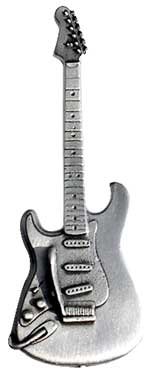
Left Handed Stratocaster Electric Guitar Metal Belt Buckle


The short answer is yes. Vintage guitars are getting harder and harder to come by. Many of the large chains simply do not carry a lot of vintage, unless you live in bigger cities, and I do not. Even in large cities like Miami, NYC, L.A, etc, there are people waiting to snatch your vintage Fender guitar away from you. So, what to do?

eBay is the answer! Yes, it's true.

You can trust people on here, just look at their score on eBay and if it were in the 98%-99%, I'd say you were good to go. That's what I trust anyway. Then you can click on their username and find out what items they have sold previously.

This way, if they say they are selling vintage fender guitars or Fender custom shop guitars, you can see if this is true.

The Selection Just Can't Be Beat

Many stores only offer a handful of truly vintage Fender Strats. Not eBay. You'll find Strat makes and models, even Fender Custom Shops, relics and Masterbuilt Stratocasters. Not bad huh? If you love Vintage Fender guitars but can't afford one right now, check out the Fender Relics or Custom Shop guitars. PLUS, the Masterbuilt ones are incredible, right down to the original specks of that '57 Fender Stratocaster you've been eying.

Oh, and another tip: You don't want to buy a Vintage Fender Strat or Vintage Fender Telecaster from a guy selling comic books, right? So pay attention to their quality score next to their name on the top right and click their user name to see what else they have sold. Good luck finding YOUR perfect guitar!

Lawton Chiles runs http://www.fenderguitarvault.com and highly recommends his FREE Tone report, full of famous guitarists amp and tone settings, plus their equipment detailed Get your free TONE report today!

fender 50th anniversary stratocaster

Wednesday, 5 August 2009

Fender Stratocaster Guitar Die-Cut Wit & Wisdom Magnet

Paper House Productions combined this top selling image with an inspirational and humorous quote to create a perfect magnet for refrigerators, lockers and file cabinets. Heavy duty magnet perfect for high traffic areas.

"One good thing about music, when it hits you, you feel no pain."

Measures approximately 2.75" x 3.25". Ships in an attractive gift sleeve.


The fame of karaoke all over the world is phenomenal but its origin has never been uttered. Nowadays, karaoke bars are becoming more popular in various countries. As a matter of fact, most restaurants offer machines with songs in different languages for free. Nevertheless, the mere thought of going to karaoke bars often raise some eyebrows. On the other hand, those who complained but gave it a chance, it has been hard for them to withdraw themselves from the fun it gives.

Where does this well-known form of entertainment really come from? Although the exact story of the emergence of it is vague, we can still track its etymology. The word 'karaoke' comes from 'kara', empty (short for karappo) and 'oke' (short for okesutora), orchestra. As known, karaoke tracks only have music accompaniment. The vocals are provided by a "singer", amateur or not, who holds a microphone and sings while following the words displayed on a screen or in a book.

With the evolution of technology, karaoke has been brought to every home. Its first real technological advancement is the development of home sets that allows you to sing at anytime. There were also karaoke tapes that have been made available to the public. Then, the birth of compact disc made it even exciting as it offers hundreds of songs in just one disc. These music paraphernalia comes with a lyric book and can be played with or without vocals.

Going back to its roots, the congestion of Japanese neighborhood have become a major problem in setting up karaoke sets. With houses built closely to one another, many complained about too much sound coming from other houses. And so, entrepreneurs took advantage of this issue and created the soundproof karaoke boxes. The box is a converted freight car with closed-door insulated rooms and soundproof. This is marketed as a venue where one can sing so loudly without creating inconvenience to other people. The first karaoke box was developed in 1984 in a rice field in the countryside of Okayama Prefecture. Sooner, Karaoke Boxes became popular and were put up in open spaces in both rural and urban areas.

Time flies and we're now embracing the continuous development of portable Karaoke Microphones. This sound device has a built-in program and a chip that houses thousands of songs. And because it is portable, playing it anywhere you want is possible as long as there is a television.

I'm selling the famous Enter Tech magic mic. I also love to read magazines of various topics and an active contributor of the music blog.

fender highway one stratocaster revie

Sunday, 2 August 2009

fender stratocaster

i love fender stratocaster

History
There were other solid body electric guitars before the Fender Telecaster guitar. But the Tele, as it sometimes known, was invented in 1940s by Leo Fender and others in California. Leo later created the successful Stratocaster guitar. The body of the Telecaster is a solid one piece design.

Body
The Telecaster is a single cutaway guitar. A cutaway is an indentation or scallop in the guitar body, where the neck joins the body. Since the Telecaster is a single cutaway, it has only one cutaway below the neck where it meets the body. This cutaway provides room for the guitar player's hand to occupy when playing notes "high" on the neck.

Neck
The Telecaster had a one piece maple neck, one of Fender's many innovative design and manufacturing techniques. Today the Tele is available in maple and rosewood fretboard models.

Pickups
Originally Fender sold a single pickup guitar called the Esquire. A short time later a two pickup version of the guitar was named the Broadcaster. However, the Gretsch company objected due to their line of Broadkaster drums and Fender renamed his guitar The Telecaster. The Telecaster has two single coil pickups, as opposed to the double coil "humbucking" pickups found on some other guitars such as those by Gibson. The pickup nearest the bridge is mounted in a slanted position. The Telecaster had a three position switch to select the pickups. Musicians and Fender have tried other pickup combinations on the Tele, including using double coil or "humbucking" pickups.

Bridge
The bridge has three adjustable saddles carrying two strings each. For many years the Tele was available with a large chrome cover, Fender seems to have omitted this on many models recently. A popular add-on for the Telecaster is called the B-bender. This attachment allowed a smooth bend of the pitch of the B string, simulating the sound of a steel guitar. This was, of course, popular with country musicians.

Company History
Fender had a troubled history after CBS bought it 1965. However, Fender management bought out the company in 1985 and restored the company's prestige and reputation as a manufacturer of quality musical instruments.

Future
Today there are numerous models of American Standard Telecasters available from Fender in various price ranges. Its popularity and Fender's renovation guarantee a successful future for the Telecaster.

Mike Furlong

I like to play guitar, talk about guitars, and collect them. So many guitars, so little money!
Take a look at the many types of Telecasters that are available!
Electric Guitar Advisor Fender Telecaster electric guitars

fender stratocaster mim

Friday, 24 July 2009

Fender Standard Stratocaster Pickguard - Black Pearl - For 2 Humbucking and 1 Single-Coil Pickups

Guitar Replacement Pickguard. Made by Fender.

One of the really nice things about Fender instruments is that you can change the look of your instrument with relative ease.

One of the easiest ways to accomplish this is to replace the pickguard! Fender offers a variety of pickguards with different pickup configurations and materials to help you add a personal touch to your favorite Fender instrument. This 4-Ply, 11 Hole Pickguard, is for 2-Humbucking and 1 single coil pickups.

Fits:

  • American, American Standard, Hot Rod and Deluxe Series Stratocasters, (also Big Apple / Double Fat Strat) (USA)
  • Standard, Deluxe and '70s Stratocasters (Mexico)


In the current world of investing for the future, one sure way to beat inflation and devaluation of the bond market is to put your money in vintage electric guitars. The demand for original flying v or Paul McCartney left handed guitars continues to rise in spite of recessions.

Especially in demand are vintage Gibson hollow-body, Fender's vintage sunburst Stratocaster and vintage Fender guitar amplifiers. Nostalgia for early rock is only one reason for the high valuation of vintage guitars and accompanying guitar equipment. The main reason demand is so high for vintage guitars is the sound they produce is as unique as the instrument itself.

Decades ago, when vintage guitars were new, the technology to produce them was in its early stages and many of the electric pick-ups had to be hand-wound or if they were machine made, each was just a little different. A few less strands of wire in the pick-ups caused a little different sound. The bodies were not completely uniform either, making the sound-box on each just a little different from the next guitar being made. As a result, each guitar was just a little unique. Additionally, over time, the electronics degraded a little causing even more difference and variation from instrument to instrument.

Original Fender guitar amplifiers were made with tubes and not with current "solid-state" circuitry. Tubed amps, like Fender and Epiphone vintage amplifiers had unique sounds which cannot be made with the cleaner Marshall or Yamaha solid-state amplifiers on the market today. Those with good ears can tell a guitarist playing vintage guitars and on vintage amplifiers.

When buying a vintage guitar or vintage amplifier, look for low Fender serial numbers on the back of the body. Review serial number ranges from web-sites of Fender, Epiphone, Gibson, Jackson, and Yamaha to find when the vintage guitar you are considering was made. Knowing as much about your investment will assure its continued increase in value.
Vintage Guitars as an Investment

One sure way to beat inflation and present devaluation of the bond market to invest for the future is to put your money in vintage electric guitars. Paul McCartney left handed guitars and original flying v guitars will have demand in spite of recessions.

Vintage Gibson hollow-body, Fender's vintage sunburst Stratocaster and vintage Fender guitar amplifiers are especially in demand. The high valuation of vintage guitars and accompanying guitar equipment is not just driven by nostalgia for early rock. The unique sound produced by vintage guitars is the main reason demand is so high for older guitars.

Each guitar was just a little bit different when these vintage guitars were made decades ago and the technology to produce them was in its early stages. Many of the electric pick-ups were hand-wound, or if they were machine-made, just a little different from the next. If the pick-ups had a few less strands of wire, the sound would be just a little different. Sound boxes as part of the bodies were not made exactly uniform either, making the guitars sound just a little different from same product lines making each guitar just a little unique. Finally, the electronics degraded over time causing each instrument to be a little different from the next.

Marshall and Yamaha solid-state amplifiers on the market today are cleaner, unlike original Fender guitar amplifiers which were made with tubes. Fender and Epiphone tubed vintage amplifiers had tonal qualities that are prized because they are not "clean", but sound unique. Guitarists playing vintage guitars and vintage amplifiers can be identified by those with good ears.

Look for low Fender serial numbers on the back of the body when buying a vintage guitar or vintage amplifier. Web-sites of Fender, Epiphone, Gibson, Jackson Guitars and Yamaha vintage guitars will guide you to when a specific vintage serial number occurred which will help you in your purchase as to when it was made and possibly for whom. In order to be sure your investment will continue to increase in value, know as much as possible before making the decision to buy a vintage electric guitar.

In these uncertain times invest and have a ton of fun to boot. Vintage Gibson guitars are an excellent way to beat that hedge. Not only is it profitable but also fun to own commemorative and rare electric guitars.

See our complete selection of vintage electric guitars as well as our other guitars at Vintage Electric Guitars

fender 40th anniversary stratocaster

Wednesday, 22 July 2009

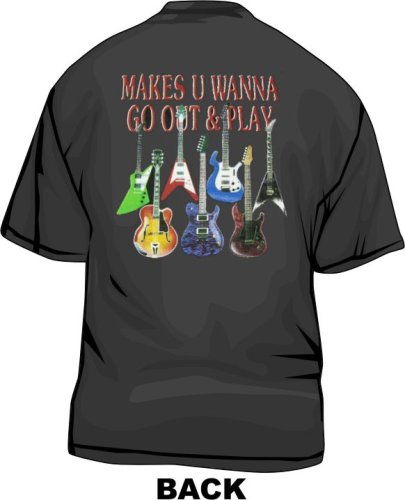
Makes You Wanna Play Multi Guitars Men's tee Shirt in 12 colors Small thru 6XL


If you've been hearing the buzz on Urge recently, it's not about a deep desire or compulsion - it's about MTV's offering to the world of online music downloads and streaming.

Urge is a subscription based music download service in which its patrons can subscribe for a monthly fee of $10 and listen to as many of the 2 million songs in MTV's coffers as they like. If they'd like to download that song, then it costs 99 cents each.

But it's not just MTV behind the latest addition to the world of online music. Microsoft and MTV are working together on this one. Bill Gates must have seen the success of similar sites like Napster and Rhapsody and decided to jump on the bandwagon. Urge's challenge will be to convince all those music lovers who prefer to buy songs and download them through sites like the incredibly popular iTunes, owned by Apple computers, that subscribing to a site and being able to listen to whatever songs you like, in whatever order and as often as you like is just as good or better than buying them one by one. It's just one more battle to add to the long running conflict between Microsoft and Apple.

Does Bill have anything different to offer through Urge? Anything that makes this latest venture stand out from similar sites? Not really. Should you choose to become an Urge subscriber, you won't find any music that you wouldn't find on any other download - subscription site. The prices are even pretty much the same.

What they do offer is a aesthetics - their site looks good. Plus, there's the camaraderie. Subscribers can post on blogs and converse with one another. But that's about it.

But with Microsoft powering the marketing and advertising engine behind Urge, it's sure to do well. Even the latest incarnation of Microsoft's Windows Media Player has Urge built in. Everyone with a PC has access to this free player and therefore easy access to Urge.

What PC users won't have is the portability provided by the wildly popular iPod. Current owners of iPods, should they decide to subscribe to Urge, will have to buy songs through the site, download them, burn them onto CDs and then convert the music files to mp3s in order to be compatible. Other portable devices are compatible with the service, however, and those are listed on the site.

This all may change in the Christmas of 2006, as buzz indicates Microsoft plans to release their "iPod Killer". Based on the Xbox brand, and including additional features like gaming, this media player is aimed right at Apple's heart, and could quickly make "Urge" a household name, assuming the two products are closely linked.

Each of the music download sites has their own strengths and weaknesses. Urge fully divides and subdivides genres so that its subscribers can easily find what they're looking for while exploring other bands that they might like. Yahoo Music Unlimited personalizes the start page to include suggestions based on the subscribers previous downloads and offers a cheaper subscription rate. Rhapsody has the best radio services, providing specialized stations that stream a pre-set list of music.

If you can't decide, then try one or try them all. Each of them offers a free trial subscription. You can experiment with all of them and decide which one suits you best.

Madison Lockwood is a customer relations associate for ApolloHosting.com. She brings years of experience as a small business consultant to helping prospective clients understand the ways in which a website may benefit them both personally and professionally. Apollo Hosting provides website hosting, ecommerce hosting, vps hosting, and web design services to a wide range of customers. Established in 1999, Apollo prides itself on the highest levels of customer support.

fender stratocaster hss

Thursday, 16 July 2009

Fender Standard Stratocaster Guitar 3-Ply Back Plate White

Guitar Replacement Backplate. Made by Fender.

Fender offers an assortment of Stratocaster back plates for all of your replacement needs.

This back plate is 3-Ply and comes in a white finish.


Ever since the guitar turned electric in 1931 rock stars have been twisting, bending and distorting the traditional sounds of the guitar to create unique master pieces that remain legendary. Rock and roll would never be if it weren't for the electric guitar. The first electric guitar was made in 1931 by the Rickenbacker company and has seen little change of the basic concepts other than the addition of solid state electronics.

Tons of different electric guitars have been introduced from countless guitar companies, but there remains a top few that have been used again and again since rock and roll arrived in the early 1950s. Below are the top 10 electric guitars of the past 50 or so years tha have became legandary.

10. BC Rich Warlock - An incredibly unusual shape introduced in the 1970s looks and sounds like its name. B.C Rich was a top choice and popularized by heavy metal bands in the 1980s like Megadeth, Danzig, Warrant and Poison just to name a few.

9. Gibson SG - The SG (solid guitar) created in 1961 was popularized by the Australian based heavy metal band, AC/DC and Angus Young's top electric guitar for sure.

8. Gibson Explorer - The airplane-looking shape was also a top favorite for heavy metal guitarists. The shape was so popular that it spawned numerous custom cloned from companies such as ESP. James Hetfield of Metallica was regularly on display with this top guitar.

7. Danelectro - One of the most simple, yet flashy designs, the Danelectro was pretty and sported a cylindrical pick-up nicknamed the "lipstick." Jimmy Page of Led Zeppelin fame made this his top choice in the last few years of the band's existence.

6. Gibson SG Doubleneck - One of the strangest looking guitars, but one of the most versitile. What was tops about this guitar was that the top guitar was a twelve string and the bottom a six. This allowed for cool variations in tone and feel without the need of switching guitars during a song.

5.Gibson Flying- V - A top rock guitar for musicians who want to make a statement. Though awkward to play in a sitting position (arguable because you can't rock out sitting down), this guitar was actually a favorite of Jimi Hendrix.

4. Rickenbacker 425, 360/12 - There is no mistaking the sound of a Rickenbacker because of is resonating tone of the 12 strings. Made famous in rock and roll by George Harrison and John Lennon, this later became a top pick for bands finding a more melodic yet harmonic electric tone. Since then, bands ranging from the Byrds to R.E.M. also consider this a top pick and a staple of their unique sound.

3.Fender Telecaster - Another uniquely toned guitar made famous by Jimmy Page, this interesting single-coil pickup sound machine also sported a special "bending" device hooked to the top string that can be manipulated by pulling down on the guitar strap.

2. Fender Stratocaster - You cannot mistake the hollow, yet clear and bright sound of a Fender Stratocaster. It is amazing that a guitar this old has remained unchanged and yet still delivers the same power that Jimi Hendrix and Eric Clapton made famous back in the 60s. This is arguably the top choice of all Chicago-style blues players.

1. Gibson Les Paul Standard - Sexy, standard and unchanged, this top pick delivers the power and punch that has been heard by the top rock and roll bands in history. Sporting dual humbucker pickups, this guitar's sounds is like that of a 1960's muscle car. From metal, to hard rock, to punk and funk, the Les Paul Standard is arguably the most popular electric guitar in history.

Although it is nearly impossible to list these top electric guitars in any order, one can safely say that purchasing and playing any guitar on this list will certainly put a smile on your face and at the same time, conjr up fantasies of being on stage with your favorite bands. TonyRocks.com has continued this list but also reviews a number of newer guitars that didn't make it to this top list. Plus you'll be amazed at some of the guitar shreding videos posted by Paul Gilbert, famous for his Ibanez.

Want to learn more about rocking out and picking the right electric guitar for you? Visit http://learnplayguitar.tonyrocks.com and discover what it takes to shred like your favorite guitarists.

aluminium fender stratocaster

Friday, 10 July 2009

Stratocaster Greats: Playing in the Style of Fender


The Gibson Firebird was made from 1963-65 in the initial reverse body shape, and from 1965-69 in the non-reverse shape. The two models were later reissued and are still on sale. Gibson had been accused of being overly conservative in the 1950s, only marketing the Les Paul solid-body electric guitar and its various semi-acoustic guitars such as the ES series. This meant that, to the younger market Gibson were at a disadvantage to Fender's more modern designs, the Stratocaster and Telecaster. As a riposte to all the people who claimed Gibson were being too conservative, the company released the Explorer and Flying V models in 1958 as part of an angular three-guitar "Modernistic series", along with a third guitar, the Moderne, of which none were ever built until the model was "reissued" in 1982. The three modernistic guitars were very unsuccessful. In the original 1958 series of guitars, no Modernes were built, (although some eager collectors are still waiting for a 1958 Moderne to surface), and less than 150 Flying Vs and Explorers were built in total. The Modernistic series was discontinued in 1959, having been a complete failure.

Gibson decided in 1963 that they needed another foray into more modern styles of guitars, although they were careful to avoid another failure like the Modernistic series had been. They enlisted the help of Ray Dietrich, an American car designer. Dietrich decided to use the Explorer model as a base and came up with what would become the Firebird shape, basically an Explorer with rounder edges and a softer shape overall.

Gibson released the Firebird in "reverse-body" format in mid-1963. It was much more successful than the Modernistic series was, although 1960s guitarists still found the shape too radical for their tastes. It was decided in 1965 that the bold Explorer-esque shape was to blame. Gibson designers put the body on the other way around, and the more conventional "non-reverse" body style was born. This was sold from 1965 to 1969, when the Firebird was discontinued altogether.

In 1972 the "reverse" Firebird was reissued. The "non-reverse" body was not reissued, although it was added as a Gibson Custom Shop guitar in 2002.

In the Firebird's original range there were four models, all unusually named using Roman numerals. The Firebird I had one humbucker pickup and chrome hardware. The Firebird III had two humbuckers, a Gibson Vibrola tailpiece and chrome hardware. The Firebird V was the same as the III, but with a Tune-O-Matic bridge. The Firebird VII had three humbuckers, a Vibrola tailpiece, a Tune-O-Matic bridge and gold hardware. Later the Firebird XII was added to the range. It was a "non-reverse" shape with 12 strings and two pickups. The pickup options were Gibson's old-fashioned P-90 singlecoil, humbuckers, or mini-humbuckers.

The "reverse" Firebird is noted for its' radical shape and the fact that the tuners are on the back of the headstock, hidden from view. The more conventional "non-reverse" shape eschewed both of these traits.

Famous Firebird players include Eric Clapton, Dave Grohl of the Foo Fighters, Johnny Winter and Brian Jones, original lead guitarist for the Rolling Stones. Allen Collins of Lynyrd Skynyrd also used a 1964 Firebird to record the famous solo in Free Bird.

Mark Flys is webmaster for the online guitar guide. The online resource for all guitar and bass information, online lessons, tabs and cheap instruments. http://www.onlineguitarguide.co.uk

fender 50th anniversary stratocaster

Tuesday, 7 July 2009

Stevie Ray and his Fender Stratocaster Decorative Art Photographic Poster Print by Rhonda Watson, 20x16

AllPosters.com is the world's #1 seller of posters, prints, photographs, specialty products and framed art. We're dedicated to bringing our customers the best selection of high quality wall décor that is perfect for their home or office. Browse our catalog of over 300,000 items that include entertainment and specialty posters, decorative prints, and art reproductions. Whether you're looking for your favorite movie or music poster, a framed Monet reproduction, or a print of the Eiffel Tower you will find it at AllPosters.com. Visit our Amazon store today at www.amazon.com/allposters to find Special Offers and search by subject category or artist. AllPosters.com provides unmatched service with a 100% satisfaction guarantee. We ship internationally to over 80 countries. Decorate your home today with your favorite pictures.


Have a child in piano lessons who wants to compose their own songs, but is having trouble getting started. Does he or she try to make up their own melodies on the piano? Piano Students often think they have to be Beethoven or Mozart to compose their own pieces. It's not true. Here are five tips to help piano students begin to compose their own songs. Share it with your piano student at home. Or maybe you'd like to try your own hand at composition.

1. I can't think of a tune or anything to write lyrics about.

Every piano student has a source of song. You just have to know where to look for it. I recommend that students who want to compose their own music keep a "Piano Memory Box." This is a special place to store keep sakes and mementos of special personal experiences they want to remember in the future. I made one of these for my son when he was a young piano student and he still uses it as a senior in High School. When he was little I suggest he put things in it like photographs of special memories, a ball of cotton dipped in his grandmother's perfume, a little jar of dirt from a special vacation spot we liked to visit, or the school paper he wrote on "What I Did This Summer." Over the years he has put lots of things in this little box. Recently, I happen to notice him throw in some ticket stubs to a move he saw with his girl friend. As he grows into a man I hope he'll remember to take a look back inside this little box whenever he's looking for a source of song or inspiration, and remember who he is. Oh, there will be some sad memories there as well, but this too is the stuff song writers are made of. Just look back at your own history of experiences to compose a song that is meaningful to you.

2. I don't know how to get started.

Songs are just poetry put to music. Start by writing a poem. Once you have your poem, white another short statement that summarizes your message. Use this as your chorus. If students can manage to do this in English Class they can do it in piano.

3. I don't hear any music in my head.

To hear some music in your head, start singing your poem or playing it on the piano. Think of the tone and spirit of your poem. Is it funny, or beautiful, or stormy? Then start creating your melody by asking a question. Then respond to it by giving an answer. This is referred to as a call and a response. The "Call" sounds unfinished, and the "Response" completes the musical idea. This will be your first verse.

4. I can't figure out how to put the music together so it flows.

Take your first verse and call it A. Then create another call and response for your chorus. We'll call this B. Write as many verses as you want to. Here is a simple option for putting your song together. A/B/A

Here's an example to show you how easy this is.

A: Verse Call - Twinkle, twinkle, little star

Response -How I wonder what you are.

B: Chorus

Call - Up above the world so high,

Response - Like a diamond in the sky.

A: Repeat Verse

5. I still can't think of a melody for my poem.

If you still can't come up with a melody, try this. Create a variation on the simple melody above. This will help you begin to hear and understand how melodies are created, using the call and response technique. To hear more complex variations on this childhood melody, find a piano CD with some of the many variations on this theme composed by Mozart.

To learn the best way to share the gift of music with children visit Amazon.com for my Piano Bears Musical Stories for Children The exciting Piano Bears Musical Stories for children ages 5 to 11 feature the loveable characters, Mrs. Treble Beary and her new piano student, Albeart Littlebud. Children love following along with Albeart to Mrs. Treble Beary's piano studio in Musical Acres Forest. Here they learn what piano lessons are all about in a fun way that kids readily understand and appreciate! Piano students laugh and giggle while reading "Little Bear's Musical Garden" and "Little Bear's Piano Goals."

For a wealth of f'ree information and piano music online visit Piano Bears Music Education Resources Don't Wait to Share the Gift of Music!

counterfeit guitars fender stratocast

Tuesday, 16 June 2009

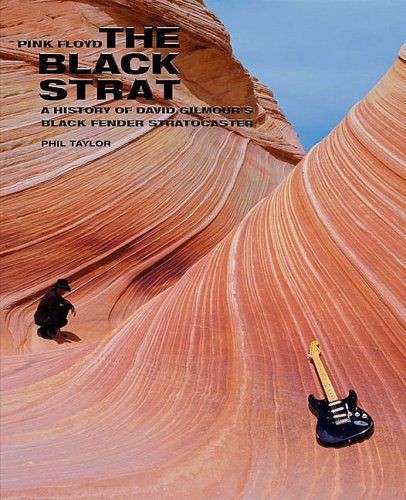
Pink Floyd: The Black Strat: A History of David Gilmour's Black Fender Stratocaster

The Black Strat book is the first and only accurate and knowledgeable account of David Gilmour's favorite Stratocaster guitar. Written by Phil Taylor - David's personal guitar technician since 1974 - to coincide with the release of the long awaited and much requested Fender 'David Gilmour Signature Strat': an instrument replicating the look, set-up, sound and feel of David's famous black guitar as it is today. The chronological story begins with David Gilmour joining Pink Floyd in early 1968, his guitar at that time, his subsequent instruments leading to the purchase of the Black Strat in 1970, and the other guitars that have come and gone. The book details all of the changes and modifications made to the Black Strat, its use on Pink Floyd tours and iconic albums, David's solo projects, and various guest appearances throughout the years.
Customer Review: Pink Floyd: The Black Strat A history of David Gilmour's Black Fender Stratocaster
After reading this book in one sitting, it became an inspiration for me to build my own Gilmour black strat. It is a must for any fan of Pink Floyd as well as David Gilmour fan. A very detailed history of the guitar and it's owner and the various changes the guitar went through 'til it reached its current state. A wealth of pictures as well as info, so much as i said that i built my own gilmour strat. The only changes i made were in the neck, it is a C-shaped but a bit smaller to fit my hand, i did put a duncan ssl5 in the bridge, but instead of the fat 50's in the neck and 69 in the middle, i put 2 duncan ssl-3 in the neck and middle but the middle pickup is reverse wound, and instead of drilling a hole in the pickguard for the extra switch to turn on the neck pickup, i used a push-pull pot on the lower tone control to add the neck pickup. I decided to do the N.O.S version instead of the relic'd version. See if this book had that kind of inspiration for me, imagine what it may do for you. Go out and get it, enjoy yourself reading it, even if you don't build guitars.
Customer Review: David Gilmour's Black Strat-GRN
I, at first, scoffed at this story of David Gilmour's Black Strat; however, the more I thought about it, the more I believed that it would offer something of a storied journey. This proved to be a good historical read and journey of not only David and Phil Taylor, Daivid's Guitar Technician, but also of the journey of the Black Strat and several other Floydian Guitars. I am glad that I purchased and read this account.


When recording, mixing down, and mastering, we always come across those 3 different EQ options. Many ask, what is the difference between them and which one should I use. here is a little information to help you get started.

The one most of you will be familiar with is the Graphic EQ as shown in the example below. The faders are arranged from low to high frequency. The are set to a specific frequency. The graphic EQ is most often used to control feedback or to get the sound you want out of an instrument. In a recording environment, once the feedback is taken out of the room, the settings usually stay put.

Parametric EQ you will find to be very different from the Graphic EQ. They permit you to choose exactly which frequency you want via the Frequency setting and the Q control. A wide Q will center your frequency around a broad group of frequencies which will all be affected. It is a very broad adjustment. A narrow Q will only affect the frequencies within the narrow Q.

You can also set the Q to affect one sole frequency. This works well if you have a single frequency affecting your mix. You can easily isolate it and adjust accordingly. Software such as Cakewalk Sonar 6 Producer comes equipped with its own internal software version of all the varying types of EQ's in this article.

Paragraphic EQ is similar to the parametric EQ in that you can chunk out areas of frequency, but it does not give you the Q. It is a nice medium between a Graphics EQ and a Parametric EQ. It is very applicable for live sound, but we are seeing more and more studios putting the Paragraphic EQ to work.

I hope this helps to understand the differences, similarities and applications of these different types of available EQs.

Tinamarie Hite(Dae) is a musician and a sound engineer. She has over 20 years experience in the music business. Her experience covers a wide range of subjects from jazz theory to recording to the know hows of booking, gigging and live stage setup. She is currently working on several music projects. These include singer/songwriter productions, The Acoustic Duo, Cd recording, and a new band. Putting her experience to work comes naturally.

More informative articles can be found at http://www.musicxspot.com

counterfeit guitars fender stratocast

Thursday, 2 April 2009

Fender Stratocaster Guitar Die-Cut Wit & Wisdom Magnet

Paper House Productions combined this top selling image with an inspirational and humorous quote to create a perfect magnet for refrigerators, lockers and file cabinets. Heavy duty magnet perfect for high traffic areas.

"One good thing about music, when it hits you, you feel no pain."

Measures approximately 2.75" x 3.25". Ships in an attractive gift sleeve.


If you're going to buy a guitar, it should be the Gibson Les Paul Guitar. The guitar has a reputation for high quality and gives to warm, classic guitar sound that most guitarist live for. The Gibson Les Paul Guitar is the best of the best; it's only real competition is the electric guitar stratocaster by Fender.

If you're going to buy a Guitar online, you should consider the company it comes from, the item in question, the price, and the store. The guitar is created by Gibson, which is one of the best and most reputable guitar companies of all time. They have a reputation for producing famously high quality products that are played by pro guitar players. The item in question - the Gibson Les Paul Guitar - is one of the best in style and quality that Gibson makes. The third thing you must consider is the price. Everyone wants to buy a low priced LP guitar, but you have to be realistic. Don't pay more than the guitar is worth, but realize that the more you pay, typically the better the quality. The Gibson guitar typically runs around $1,000 to $2,500 for the guitar. If you're lucky you might get it for less; if it's in exceptional quality, it may cost more. For this guitar, it's worth that price range. You can try shopping on eBay to find one at a discounted price. Lastly, you must consider the company you're buying from, which I'll address in the next paragraph.

There are many places you can buy this online, which is the beauty of it. You have such a wide selection. I recommend you buy online when looking to purchase guitars. You can also buy them from Guitar Center or other online retailers.

If you're going to buy a gibson les paul standard, you should do it on the internet for several reason. Firstly, the internet offers a wider selection. When shopping only, you can make sure you get what you want by comparing the prices of other online retailers. Moreover, even if you're shopping for a instrument other than a Les Paul or even other than a guitar, you have the convenience of comparing the selection of competing products from competing stores. This is something that you can only do in a limited way from a brick-and-mortar store.

The author is a guitar enthusiast who runs BuyUsedGuitars.net

fender highway one stratocaster revie

Saturday, 28 March 2009

Fender '57 Stratocaster Pickguard - Gold

Guitar Replacement Pickguard. Made by Fender.

One of the really nice things about Fender instruments is that you can change the look of your instrument with relative ease.

One of the easiest ways to accomplish this is to replace the pickguard! Fender offers a variety of pickguards with different pickup configurations and materials to help you add a personal touch to your favorite Fender instrument. This 1-Ply, 8 Hole Pickguard, is for 3 single coil pickups.

Fits:

  • 57 American Vintage, SRV and Eric Clapton Stratocasters (USA) (USA)
  • '50s Stratocasters (Mexico)


In most of the first TS-808 pedals, a JRC4558 is found (a Japanese or, more rarely, a Texas Instrument chip RC4558P). Today, the TS-808 period, it is possible to find each have evolved quite different and there is not a single color of TS-808. They were also in the range of another Tube Screamer Reference: TS-9. Basically, its success reflects the fact that the circuit is almost identical to that of its big brother; carrying the same chip: JRC4558. The difference was in the processing of the exit and this provided a sound pedal a little less hot and brighter

A TS-808 and a TS9 period.

Today of course, it is difficult to find an original model. Copies are expensive, are not necessarily all good quality according to the elements (including the famous bullet) that compose it and are quite fragile. So why go for such a sound? Manufacturers have obviously proposed models to meet the common mortals. Ibanez, of course, has proposed its first reissue of TS-808 in 2004. Using capacitors and chips of origin; calibrated to meet the output characteristics of the old pedal, and this gives a pedal manufacture high-end sound very vintage.

The second mark important to propose a reissue is the hallmark Maxon. In fact Maxon was born as a result of the judgement (temporary) of manufacturing pedals by Ibanez in the Nisshin plant in Japan. The plant produced pedals for many brands and decided to then disseminate its own products. We have therefore to do the same. engineers who carried out the original TS-808. At Maxon, OD808 take the best of the original TS-808 optimizing the noise and changing ergonomics and durability. Purists will notice that some components have been changed, but this is particularly to improve the signal to noise ratio. The result is there, the sounds are ultra typed.

The same brand also proposes a revision of the TS-9 aptly named OD9. The pedal Maxon OD9 proposes the same thing on his soeurette: namely, the single chip JRC4558; perfectly selected, but optimizing the original circuit. Especially in this case by integrating the chip that creates the distortion overdrive in the amplification of the pedal and not in a separate floor. The resulting sound is natural and incredibly responsive Thursday The result is absolutely unique.

Both pedals have been the story of the greatest guitarists of 80 years. Stevie Ray Vaughan, for example, was accustomed to boost its clear sounds with a TS-808 with the drive to 0 and volume thoroughly turned up. Or make a single reaction by placing 2 TS-808 together. as a result for the second pedal sending a more pronounced reaction to Thursday's bluesman.

Chat about pedals, stratocasters, stevie ray vaughan or just music in general over at the Fender Stratocaster discussion forums.

fender 40th anniversary stratocaster

Monday, 16 March 2009

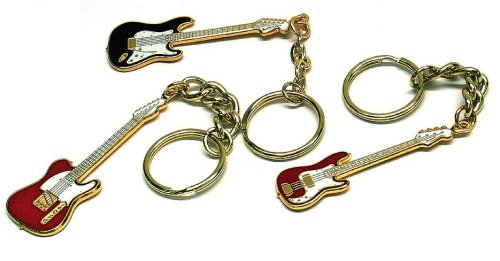
Fender Stratocaster Keychain


When most people think of electric guitars, they think of rock music. But electric guitars are more versatile than you'd think. You can find them in jazz, blues, country music, New-Age compositions, and even contemporary classical pieces. Electric guitars are intimately associated with many famous musicians of the twentieth century-and may be the iconic musical instrument of our time.

The demand for electric guitars came during the Big Band Era in the 20's and 30's. The big brass bands of the time were very loud, and other instruments had to be artificially amplified to stand up to their powerful sound. Performers experimented with attaching microphones to acoustic guitars. The first manufactured electric guitars were made in 1931 by the Electro String Instrument Corporation.

The first time an electric guitar is known to have been used in performance was in 1932. Bandleader Gage Brewer of Wichita, Kansas, received two electric guitars directly through Electro String Instruments, possibly for publicity purposes. Brewer wrote about the guitars in an article in the Wichita Beacon before the performance.

The earliest known recording of an electric guitar performance was produced in 1938. George Barnes, a jazz guitarist, recorded two songs with the guitar, called "It's a Lowdown Dirty Shame" and "Sweetheart Land."

The earliest electric guitars were essentially hollow-bodied acoustic guitars equipped with Tungsten pickups. The problem with hollow-body electric guitars is that the hollow space within the guitar produces vibrations when the strings are plucked or strummed. These vibrations account for the unique tone of an acoustic guitar, but they produce harsh feedback when they interact with the pickups in an electric guitar. Early electric guitar players used to stuff rags and newspapers into their hollow-body instruments in an attempt to get rid of the feedback.

One of the earlier solid-body guitars was an aluminium instrument known as the "Frying Pan" or "Pancake Guitar." These guitars were said to have produced a sound similar to that of modern electric guitars.

Several other well-known luthiers experimented with solid-body guitars during the early history of the electric guitar. In 1940, during his time at Gibson Guitars, Les Paul attempted a solid-body instrument called the "log guitar," so called because it was a simple post equipped with neck, strings, and pickups.

The electric guitar did not hit commercial success until the 1950's, when Fender released its first solid-body model: the Esquire. The Esquire was followed by the Telecaster and finally, in 1954, the Stratocaster. The "Strat" was hailed in professional musical and luthier circles alike, and became a signature instrument of such famous musicians as Jimi Hendrix, George Harrison, David Gilmour, Eric Clapton, Jimmy Page, and many others.

The electric guitar produced an aggressive sound very different from the melodic and lyrical tones of its ancestor, the acoustic. The sound of the electric guitar became characteristic of rock and roll in the 60's and 70's. It was a high-profile instrument during this time, appearing on stage with hundreds of famous bands and musicians.

This created demand among the general public for affordable electric guitars. In the 60's and 70's, electric guitars were very expensive-too pricey for a buyer who wasn't a famous musician. Although some companies attempted to fill the gap with cheap imitations, the sound of these guitars did not compare to the real thing.

It wasn't until the 1980's that Japanese manufacturers stepped forward with affordable electric guitars capable of professional-quality sound. This put pressure on American companies such as Gibson and Fender to provide their own affordable lines. Electric guitars became more and more successful in the consumer market as quality improved, and prices went down as new manufacturers entered the market. Soon, electric guitars were more accessible than they had ever been.

Today, the electric guitar is one of the most prolific instruments in popular music. You can find it in a wide variety of genres, from metal to New Age. You can also buy an electric guitar like the rock stars have-without paying the prices they pay. Because it's so common in contemporary music and in the hands of amateur musicians, there's little doubt that the electric guitar is one of the most successful instruments of the twentieth century.

Paul is managing director of Rose Morris Musical Instruments based in Denmark Street, London - for a wide range of the latest electric guitars including PRS guitars visit http://www.proaudiostore.co.uk/rosemorris/PRSGuitars.html

fender 40th anniversary stratocaster

Wednesday, 11 March 2009

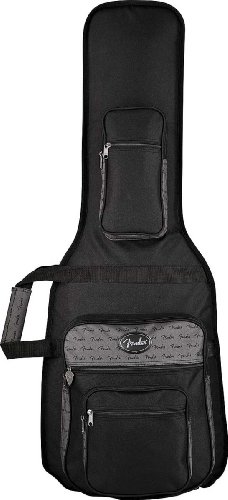
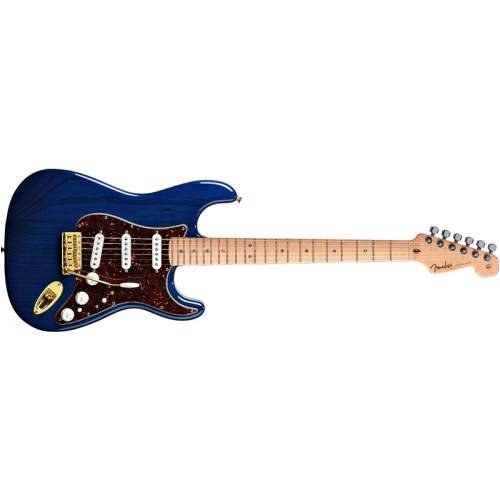
Fender Deluxe Player's Stratocaster Electric Guitar - Maple, Sapphire Blue

Electric Guitar. Made by Fender.

The Deluxe Players Stratocaster is a revised version of the former Super Strat. Upgraded with American-made Vintage Noiseless pickups, this guitar not only sounds great but with a 12" neck radius and medium jumbo frets it's a workhorse of a guitar! And, don't forget about the push button switch that gives the player nine different pickup combinations!

Features:

  • BODY Ash
  • NECK Maple, Modern "C" Shape, (Satin Polyurethane Finish)
  • MACHINE HEADS Gold Plated Fender/Reliance Vintage Style Tuning Machines
  • FINGERBOARD Maple, 12" Radius (305mm)
  • NO. OF FRETS 21 Medium Jumbo Frets
  • PICKUPS 3 Vintage Noiseless Strat Pickups
  • CONTROLS Master Volume, Tone 1. (Neck Pickup), Tone 2. (Middle Pickup)
  • BRIDGE Gold Plated Vintage Style Synchronized Tremolo
  • PICKUP SWITCHING 5-Position Blade: Position 1. Bridge Pickup, Position 2. Bridge and Middle Pickup, Position 3. Middle Pickup, Position 4. Middle and Neck Pickups (Plus Bridge Pickup When Push/Push Switch Is Activated), Position 5. Neck Pickup (Plus Bridge Pickup When Push/Push Switch Is Activated), 1-Push-Button On/Off Switch: Activates Bridge Pickup in Positions 4 and 5 of Blade Switch
  • HARDWARE Gold Plated
  • STRINGS Fender Super Bullet 3250L, Nickel Plated Steel, (.009 to .042)
  • CASE Deluxe Gig Bag
  • PICKGUARD 4-Ply Brown Shell
  • SCALE LENGTH 25.5" (648mm)
  • WIDTH AT NUT 1 11/16 (43mm)
  • UNIQUE FEATURES Gold Plated Hardware
  • ACCESSORIES Deluxe Gig Bag

NOTE: The picture on this page shows the Rosewood version of this guitar model, if you place an order from this page you will receive the model with a Maple fretboard


Every guitar player that has ever been born lives for the day when he/she can pick up a vintage guitar. Vintage guitars are available in all major manufacturers and brands. But it's not only musicians and guitar enthusiasts that are attracted to these masterpieces. Vintage guitars can also be viewed as an investment.

You're probably saying to yourself right now "How can a guitar be an investment?", "Is buying a vintage guitar really a good investment?" Allow me to enlighten you a little. To the untrained eye, a guitar is a guitar. Now we aren't talking about the walls of instruments you see at Guitar Center or Sam Ash. We are talking about those special few extraordinary guitars that just scream to be torn into.

Guitars are a great investment for a few reasons. First, they are beautiful and command a room where they are displayed. Second, vintage guitars don't depreciate or lose value with time. On the contrary, these babies appreciate and gain value as they age, especially if they are kept up nicely. Third, they have superior tonality and action when played due to the quality workmanship that went into their construction.

Undoubtedly, the most popular is the Les Paul by Gibson. This guitar carries the name of the man who invented the solid body electric guitar. In the 1960's, the Les Paul was just about THE choice of instrument. These are still made today, but the older ones were made of superior materials like mahogany and oak. Some even had gold frets and mother of pearl inlays on the fret board.

Fender also has a stranglehold on a couple of highly sought after guitars, especially the Stratocaster, the Telecaster and the Thunderbird. These were favorites among blues and rock players alike. Again, the ones everybody wants were made in the 1950's and 1960's.

Certainly among the reigning Kings of vintage guitars are those made by the CF Martin company. Martin emigrated here from Europe in the late 19th century and set up shop in New York. The craftsmanship he imparted is not only extraordinary. It is absolutely earth shattering. Martin pioneered the X-bracing system for acoustic guitars adding years to the longevity of the instruments he made. Many Martin's are still in use at nearly 100 years old!

Guild is another vintage guitar that is vastly overlooked these days. Guild was only in operation for about 25 years and was bought by Fender in the 1990's. Some of the older Guild guitars are extremely rare and sought after as they exhibited the same quality as the Martin instruments of the same time period.

Every one of these guitar manufacturers has made an exceptional line of guitars. Players like Stevie Ray Vaughn, Jimi Hendrix, Chet Atkins, Roy Clark and Les Paul have chosen them time and time again as their guitar of choice.

When bought as an investment, the vintage ones hold the possibility of giving a fantastic ROI (return on investment).

To see a collection of vintage guitars that are available right now, get on over to Vintage Guitar Zone and see what you can get your fingers around for a great price.

http://www.vintageguitarzone.com/investing

fender highway one stratocaster revie

Friday, 6 March 2009

Left Handed Stratocaster Electric Guitar Metal Belt Buckle


Every year, thousands of people head to guitar shows to admire and play vintage Gibsons, Fenders, Martins and more.Some of these guitars can sell for up to a quarter of a million dollars.They're not all that expensive, putting many in the reach of less wealthy collectors, but all of them have a few things in common.Vintage guitars are beautiful, high quality, and they appreciate in value over time.

The vintage guitar market has been going up as older Americans buy the same models of guitars as their heroes once played, and younger collectors look for the best in older instruments.Guitar collecting can out perform ordinary investments - it's much more stable, and a lot more fun than playing the stock market.A 1950s Les Paul purchased just a few years ago may now be worth five times that price.

Only a few thousand of those guitars were ever produced.That means they're among the most popular out there.Some collectors are paying record prices for them, and they don't even play.These beautiful, rare guitars are so compelling that even non-musicians are interested in owning one.A 1961 Les Paul Custom might sell for more than a hundred thousand dollars.When the first Les Paul was produced in the early 1950s, the sale price was $210.

In the past five years, the vintage guitar market has nearly doubled.The average price is about thirteen thousand dollars, according to the Vintage Guitar Price guide, which tracks the price of forty two different models produced by Gibson, Fender and Martin.Acoustic guitars have increased in price steadily, but the most collectible are electrics, propelled by the mystique of rock 'n' roll.

Solid body electric guitars from what some call the golden age - the 1950s and 1960s - have been increasing in price significantly.There's a little bit of everyone's rock heroes in these guitars, even the ones that are just the same type as those used by celebrities.Actual celebrity guitars are worth even more.Eric Clapton's famous customized Stratocaster, Blackie, sold for nearly a million in 2004.

Fame isn't all there is to it, though.Older instruments have a richer, better tone, and are made from higher quality materials.Collectors love the sound of a great Martin acoustic, or a golden age Telecaster.An older guitar produces a much better sound than a brand new one that sells for a tenth of the price.A well treated old guitar resonates better and has better action when played.
While a solid body guitar won't reverberate in the same way as an acoustic, there's still a big difference between a vintage Les Paul and a brand new one.It's the difference between a growl and a purr.If you love to play, a real, high quality guitar from the 1950s and 1960s will be a delight, as well as a great investment.

If you are interest in getting started collecting vintage guitars for fun and profit or even if you have been doing so for years, Bob's Vintage Guitars is a website that you should visit. It has a lot of useful information about vintage guitars and also a great selection of vintage guitars for sale.

The writer operates a website selling vintage guitars, Bob's Vintage Guitars at http://www.bestguitaronline.com

john mayer fender stratocaster

Tuesday, 3 March 2009

got blues? Men's tee Shirt in 12 colors Small thru 6XL

Customer Review: Excellent to do business with in every way
These guys are great to deal with. I had a very minor issue which was NOT their fault, and they went above and beyond to fix it. I would be happy to do business with them again any time.... and I hope you do as well. thank you 99volts!


Establishing & maintaining rapport with your online audience is perhaps the single most important ingredient in marketing online. Actually in marketing period, but even more so online because of the lack of personal contact. Rapport is at the core of selling, always has been, always will be.

Let me tell you a little story.

Earlier this week, I got a call from a salesman after leaving a message about getting my stereo repaired. My expensive, but aging Nakamichi CD player is on the fritz, & Im virtually tuneless. Not good.

It was a notable conversation for anybody interested in the art & science of persuasion. And in particular, the role rapport plays in that process.

My apprehension was this.

I bought the unit about 8 years ago, & Im thinking. OK, this is going to cost me some money. I could probably now go out & buy a new CD player for the same amount. Just getting an estimate is going to cost me.

So the guy calls up, & immediately starts building rapport with me. How does he do it?

After introducing himself, he says, So youve got an MB-1s, awesome unit, what do you listen to? I tell him, Im into rhythm & blues & jazz. He probes a little to see what kind of blues I dig, & we find ourselves rapping for a bit about how much we both love the music of Stevie Ray Vaughan.

And then without missing a beat, he says So I suppose youre wondering whether technology has advanced so far in 8 years that you could replace your MB-1s with a new unit for pennies on the dollar?

I say, yes.

And then he goes on to tell me. Unless youre prepared to fork out a sizable chunk of change on a relatively high end unit, your going to lose some of the raw analog warmth & character that oozes faithfully from Stevies Fender Stratocaster every time you slide a CD into that Nakamichi.

And Im like, Wow, thanks for saving my life dude.

This wasnt the only guy I called, but I can tell you this. He was the only one I considered doing business with. And it came down to the rapport he created.

So what can we learn from this?

First off, let me point out that while this was a personal interaction, you should take the principle of rapport very seriously when it comes to your marketing.

The fundamentals are thus.

I liked this guy. Because I liked him, I listened to him. Because I listened to him, I believed him. And because I believed him, I bought from him. Sure it wasnt a huge purchase. But what happened in those few minutes on the telephone takes place in virtually every sale you make, whether youre an active participant in the process, or not.

You are developing an unspoken relationship with your customers, as a result of both your personal interaction, & every piece of online marketing you deliver.

The challenge is this. How do you generate rapport, when you dont have the expensive luxury of personal contact with all of your clients at every stage of the buying cycle?

Here are a few ideas.

1) Be a person in your online marketing. Far too many businesses make the dreadful mistake of coming off as stuffy, corporate, & boring, in the name of professionalism. Your business can be professional, & still have character.

This is just as true in b2b & technical sales, as it is in consumer sales.

One of the best things you can do is deliver your marketing message in the first person. You should voice a friendly, rapport-building persona in virtually every kind of direct response advertising you do.

2) Communicate with your prospects, in their own words. If youre marketing to engineers, & you know they use acronyms, use acronyms. If youre selling to the CEO, speak in plain English. Just common sense, but so often ignored. If youre selling b2b, understand that there are multiple decision makers involved. Find a way to speak to them all. Use multiple campaigns if need be.

3) And finally, give your customers more than they expect. It is rare to do business with a company that demonstrates a genuine concern for the actual outcomes that their customers experience as a result of a purchase.

This is very different than simply being committed to the satisfactory performance of your product or service. You build rapport by showing your prospects exactly how what youre selling fits in to what they are already doing.

In the final analysis, your prospects & customers should feel like they know you as a person from your marketing & advertising. More importantly, they should know you as the kind of person they would call a friend, & look forward to hearing from.

Copyright 2005 Daniel Levis

Daniel Levis is a top marketing consultant & direct response copywriter based in Toronto Canada. Recently, Daniel & world-renowned publicist & copywriter Joe Vitale teamed up to co author Million Dollar Online Advertising Strategies From The Greatest Letter Writer Of The 20th Century!, a tribute to the late, great Robert Collier. Let the legendary Robert Collier show you how to write words that sell...Visit the below site & get 3 FREE Chapters! http://www.Advertising-Online-Strategies.com/ad-strategies.html

fender stratocaster mim
Thursday, 26 February 2009

Fender Standard Stratocaster Electric Guitar - Maple, Black

Electric Guitar. Made by Fender.

No other guitar can match it -- the Fender Stratocaster is where the great guitar tradition began and still carries on today!

Featuring a fast-action maple neck, comfort-contoured body, three single-coil pickups and standard synchronized tremolo, the Fender Standard Strat is the guitarist's guitar! Pick one up and you hold the whole history of rock and roll in your hands...

Features

  • BODY Alder
  • NECK Maple, Modern "C" Shape, (Satin Polyurethane Finish)
  • MACHINE HEADS Fender/Ping Standard Cast/Sealed Tuning Machines
  • FINGERBOARD Maple, 9.5" Radius (241 mm)
  • NO. OF FRETS 21 Medium Jumbo Vintage Style Frets
  • PICKUPS 3 Standard Single-Coil Strat Pickups (Ceramic Magnets)
  • CONTROLS Master Volume, Tone 1. (Neck Pickup), Tone 2. (Middle Pickup)
  • BRIDGE Vintage Style Synchronized Tremolo
  • PICKUP SWITCHING 5-Position Blade: Position 1. Bridge Pickup, Position 2. Bridge and Middle Pickup, Position 3. Middle Pickup, Position 4. Middle and Neck Pickup, Position 5. Neck Pickup
  • HARDWARE Chrome
  • STRINGS Fender Super Bullet 3250L, Nickel Plated Steel, (.009 to .042)
  • PICKGUARD 3-Ply White
  • SCALE LENGTH 25.5" (648 mm)
  • WIDTH AT NUT 1.650" (42 mm)
  • UNIQUE FEATURES Vintage Styling
  • ACCESSORIES Includes Fender Gig Bag

NOTE: The picture on this page shows a gutiar with a Rosewood neck, if you order from this page you will receive this same model guitar with a Maple neck


The Gibson Firebird was made from 1963-65 in the initial reverse body shape, and from 1965-69 in the non-reverse shape. The two models were later reissued and are still on sale. Gibson had been accused of being overly conservative in the 1950s, only marketing the Les Paul solid-body electric guitar and its various semi-acoustic guitars such as the ES series. This meant that, to the younger market Gibson were at a disadvantage to Fender's more modern designs, the Stratocaster and Telecaster. As a riposte to all the people who claimed Gibson were being too conservative, the company released the Explorer and Flying V models in 1958 as part of an angular three-guitar "Modernistic series", along with a third guitar, the Moderne, of which none were ever built until the model was "reissued" in 1982. The three modernistic guitars were very unsuccessful. In the original 1958 series of guitars, no Modernes were built, (although some eager collectors are still waiting for a 1958 Moderne to surface), and less than 150 Flying Vs and Explorers were built in total. The Modernistic series was discontinued in 1959, having been a complete failure.

Gibson decided in 1963 that they needed another foray into more modern styles of guitars, although they were careful to avoid another failure like the Modernistic series had been. They enlisted the help of Ray Dietrich, an American car designer. Dietrich decided to use the Explorer model as a base and came up with what would become the Firebird shape, basically an Explorer with rounder edges and a softer shape overall.

Gibson released the Firebird in "reverse-body" format in mid-1963. It was much more successful than the Modernistic series was, although 1960s guitarists still found the shape too radical for their tastes. It was decided in 1965 that the bold Explorer-esque shape was to blame. Gibson designers put the body on the other way around, and the more conventional "non-reverse" body style was born. This was sold from 1965 to 1969, when the Firebird was discontinued altogether.

In 1972 the "reverse" Firebird was reissued. The "non-reverse" body was not reissued, although it was added as a Gibson Custom Shop guitar in 2002.

In the Firebird's original range there were four models, all unusually named using Roman numerals. The Firebird I had one humbucker pickup and chrome hardware. The Firebird III had two humbuckers, a Gibson Vibrola tailpiece and chrome hardware. The Firebird V was the same as the III, but with a Tune-O-Matic bridge. The Firebird VII had three humbuckers, a Vibrola tailpiece, a Tune-O-Matic bridge and gold hardware. Later the Firebird XII was added to the range. It was a "non-reverse" shape with 12 strings and two pickups. The pickup options were Gibson's old-fashioned P-90 singlecoil, humbuckers, or mini-humbuckers.

The "reverse" Firebird is noted for its' radical shape and the fact that the tuners are on the back of the headstock, hidden from view. The more conventional "non-reverse" shape eschewed both of these traits.

Famous Firebird players include Eric Clapton, Dave Grohl of the Foo Fighters, Johnny Winter and Brian Jones, original lead guitarist for the Rolling Stones. Allen Collins of Lynyrd Skynyrd also used a 1964 Firebird to record the famous solo in Free Bird.

Mark Flys is webmaster for the online guitar guide. The online resource for all guitar and bass information, online lessons, tabs and cheap instruments. http://www.onlineguitarguide.co.uk

john mayer fender stratocaster

Sunday, 22 February 2009

Fender '62 Stratocaster 11 Hole Pickguard - Tortosie Shell

Guitar Replacement Pickguard. Made by Fender.

4-Ply, 11 Hole Stratocaster Pickguard for 3 single coil pickups

Fits: '62 American Vintage (U.S.) and 60's (Mexico) Stratocasters. Has truss rod adjustment notch.


There are many programs and sites out there that provide a large range of music and music download features. Rhapsody from Real is a digital music service that not only provides you with over 2,000,000+ songs it also acts as a music jukebox in which you can manage your song tracks. Download your copy of Real Rhapsody now

Although Real Rhapsody only comes free for the first 14 days to try, you will have access to all features for free and can than decide if you want to subscribe to the digital music player for a small monthly cost. People are often after a music downloading service for free, however what people must remember is that free program and music a lot of the time can give your computer viruses, give you bad quality music and also often do not provide you with the music you are looking for. Rhapsody provide you with music tracks that are legit, music tracks that will not have viruses and with one of the largest music service on the net - so you are sure to find what you are looking for.

Downloading Real Rhapsody to try for the first 14 days will mean that for these first 14 days your will be able to download music for free online to keep regardless if you choose to continue with the service. To get your free copy of Rhapsody click here to download now.

Downloading Real Rhapsody it for free for the first 14 days does not lock you in to any contracts or payments and if you decide that you do not want to continue after the first 14 days just simply cancel your membership in your account settings. Cancellation is instant so you will not be charged any money what so ever. To try Real Rhapsody now and start downloading song simply just visit our downloading page.

To find out more about this topic you can visit our information page, or if you want to start downloading Real Rhapsody visit the downloading page.

the fender stratocaster handbook pdf

Monday, 16 February 2009

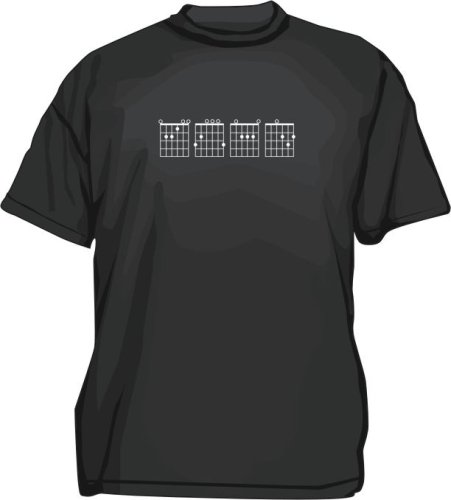
Guitar Chords Logo E G A D Men's tee Shirt in 12 colors Small thru 6XL


Did you know there are only a few patterns used on the piano? For example, there's the arpeggio, the bass-chord technique, crossed hands, and of course, the ostinato.

What's so special about the ostinato pattern? It's very easy to use! We take a chord (or an arpeggio) and create a loop with it. This allows the right hand to freely improvise melody. Even a complete beginner can get a simple chord pattern down. For instance, in the lesson "Winter Scene," we have 2 chords. Just 2 chords is all we need to create a very pleasant harmonic background over which we "paint" our melodies!

It doesn't have to get more complicated than this for an absolute beginner (or pro) to experience the joy of improvisation. The chords used for this lesson are modern sounding and are used frequently in both jazz and new age piano music. We take this four-note chord and break it up creating a lovely textural sound. We vary the dynamics (loud and soft) to make our playing more musical and from this we get 2 or more minutes of music!

It's all done with chords. Chords and phrases. Actually, "Winter Scene" is simply a 4-bar phrase repeated a number of times. By thinking "in phrases" the improviser/composer learns how to use the art of repetition and contrast to advantage. No longer thinking in just chords, it becomes easier to block out entire sections of music quickly and easily!

Edward Weiss is a pianist/composer and webmaster of Quiescence Music's online piano lessons. He has been helping students learn how to play piano in the New Age style for over 14 years and works with students in private, in groups, and now over the internet. Visit http://www.quiescencemusic.com now and get a FREE piano lesson!

the fender stratocaster handbook pdf

Wednesday, 11 February 2009

Stratocaster Greats: Playing in the Style of Fender


On the list of greatest guitarists of all time there could be literally hundreds of names. There have been so many influential guitarists who have changed the world of music for the better. However, there are certainly a few that stand above the rest. Not only are they incredible in how they play, but they have endured the test of time and really have been inspirational for so many up and coming guitarists.

The one and only Jimi Hendrix is at the top of the list for many reasons. Considered to be by far one of the greatest guitarists in rock music history, Hendrix achieved world wide fame back in the late 1960's. Starting in England he made a name for himself at the Monterey Pop Festival and then later at Woodstock in 1969. He was a pioneer of guitar feedback and was the first to incorporate overdriven amplifiers, which until then were thought of as a way to make bad music. Hendrix played one of the most amazing guitars of all time with his Fender 60's Reverse Headstock Stratocaster.

Second on the prestigious list of greatest guitarists of all time should be the incomparable Jimmy Page. Joining the group The Yardbirds before starting the band known to all as Led Zeppelin, Page was one of the most versatile guitarists in history. He was ranked number nine in Rolling Stone's list of 100 top guitarists of all time. Playing his Gibson Les Paul Classic as well as his Gibson Custom Shop Jimmy Page Double Neck Electric he was pure magic on stage.

Also one of the original members of The Yardbirds, Eric Clapton is a name that is synonymous with amazing guitar playing. With a nickname such as "Slowhand" Clapton won several Grammy Awards and is one of the most successful guitar players and musicians in the 20th and 21st century. With an amazing three inductions into the Rock and Roll Hall of Fame, Clapton is the reason that many youngsters even pick up a guitar for the first time. He was a pioneer for blues-rock as well as psychedelic rock while playing his famous Eric Clapton Artist Signature Stratocaster.

Making this list of greatest guitarists of all time, you can't help but remember Carlos Santana. With his blend of rock, blues, jazz fusion and salsa, his music is truly inspiring. Santana is one musician that can change with the times and adapt his guitar playing to the various types of music he is working on. With a decidedly Latin flair, his music reaches to the core of your soul. Playing on a PRS Santana II named after him or the Gibson SG, Carlos Santana sounds great no matter what music he plays.

Whether your choice for greatest guitarist of all time would be someone in heavy metal like Slash from Guns N Roses or Angus Young from AC/DC or someone more rhythmic like Keith Richards there are certainly many choices out there. The one thing they all have in common is that there is literally no end to their natural talent and their ability to really rock the guitar.

Stop wasting money on 1-on-1 guitar lessons! Check out Steve Krenz's awesome Learn and Master Guitar course, it beats the pants off anything out there. It's the most comprehensive and thorough instructional guitar course available today. Advanced guitarists should check out http://www.madguitarlicks.com for 35 killer licks to add to their arsenal.

aluminium fender stratocaster

Thursday, 15 January 2009

Playing in Style of Fender Stratocaster

Customer Review: insight to signature fender telecaster styles/sounds
this video and the accompanying booklet provide great insight for the beginner or experienced player to the equipment spec's., and details of special tunings, chord-voicings and techniques of the most prominent and enduring telecaster driven superstars. i have not been able to find a second, or follow-up volume to this video (an effort well-warranted). nonetheless, if you're looking for a launching point from which to delve further into the playing of superstars like danny gatton, james burton, johnny lang, albert lee, kieth richards, and andy summers- this is money and time well spent.


As bands grew larger in the 30s and 40s, hence the term "the big band era", they got louder. Brass instruments are naturally loud and as these horn sections were added in strength to bands, who could hear an acoustic guitar over the din? As is usually the case necessity became the mother of invention and luthiers (guitar makers), engineers and musician's thoughts turned to finding a way to amplify a guitar's sound. Little did they know that the groundwork they laid would evolve into the modern technology of music made available today.

Initial attempts utilized microphones attached to hollow body guitars but the volume needed just could not be produced. In 1931 the Electro String Instrument Corporation created an electric guitar using tungsten pickups. It was called a Rickenbacker named after one of the company's owners, Adolf Rickenbacher. He changed the spelling of his last name to Rickenbacker partly because his cousin was the famed World War I combat ace Eddie Rickenbacker.

In the 1940's two of the most famous names in the electric guitar's history, Les Paul and Leo Fender, created their versions of this modern day instrument. Les Paul worked for the Epiphone Guitar company and in his spare time experimented with various electric guitar designs. Through the years the solid body Gibson Les Paul has become a mainstay of many rock guitarists instrument arsenals. The Fender Guitar company began with the Esquire, a solid body with a single magnetic pickup, followed with a two pickup model, the Broadcaster, whose name was changed to the Telecaster and in 1953, the Stratocaster was introduced.

Through the years many different models and designs of the electric guitar have appeared. Some mindbogglingly expensive and some quite affordable. There is also a wide variety of special effect devices and amplifiers to choose from. One of the coolest designs I've seen is the double neck electric six and twelve string used by Richie Sambora of Bon Jovi in the song Wanted Dead or Alive. Gibson also markets a Jimmy Page Signature double neck guitar.

One of rock's most prolific guitar owners is Rick Nielsen of Cheap Trick. He owns a custom made five neck, yes you heard right, five neck guitar built by Hamer Guitars and has owned over 2,000 guitars at one time or another. I'm still working on mastering a single neck and this guy's on five. Amazing talent.

Whether you're into rock or jazz, folk or country, acoustic or electric, here are some of my favorite learn to play guitar courses. Check them out at http://www.reviewsbytheigmonster.com/

aluminium fender stratocaster

Wednesday, 14 January 2009

got blues? Men's tee Shirt in 12 colors Small thru 6XL

Customer Review: Excellent to do business with in every way
These guys are great to deal with. I had a very minor issue which was NOT their fault, and they went above and beyond to fix it. I would be happy to do business with them again any time.... and I hope you do as well. thank you 99volts!


Metallica's lead guitarist, Kirk Hammett, was listed as number 11 on Rolling Stones list of the 100 Greatest Guitarists of All Time. While playing with Metallica, Hammett contributed to many songs that were huge hits, developed some killer riffs and earned himself and his band seven Grammy awards. Metallica is considered one of the best-known heavy metal bands and has produced many hugely popular albums, including its self titled album that sold 15 million copies. Four of Metallica's albums reached number one on the Billboard 200 and their combined record sales for all the albums are somewhere around 95 million. If you are a guitar player and would love to replicate Kirk Hammett's rock star success, take some tips from the man himself.

Hammett possesses a true love for playing the guitar and for music in general. This might explain why he claims to play his guitar 361 days out of the year. If you are looking for guitar tips from Hammett, the first one is to practice obsessively. Hammett started playing the guitar when he was 15 with an unimpressive guitar that he got from a Montgomery Ward catalogue. He decided he needed an amp to go with his guitar so he made one out of a shoebox and a four-inch speaker. Eventually, he got a job as a dishwasher at Burger King to finance his musical inclination. It wasn't too long before Hammett was able to upgrade to a Fender Stratocaster, and then moved on to his favorite of all time, a 1974 Gibson flying V. Another hint from Hammett is that you don't have to be in possession of the best equipment available. You just have to start somewhere and work with what you have until you get better and can upgrade. Hammett definitely didn't start out with the fanciest music gear, but his love of music and playing the guitar kept him going.

Hammett is a man who is constantly curious and interested in learning new things. He is quoted as saying "a life lived unexplored is a life not worth living." This character trait played out well for him on a few levels in his guitar career. His curiosity kept him experimenting with different techniques on his guitar in a quest to develop something truly unique. This brought about the "Frankenstein" technique that Hammett invented by using different pick-up and amp combinations. After Hammett joined Metallica, his desire to learn and explore gave him the motivation to join the ranks of some other guitar greats and take guitar lessons from Joe Satriani. This was a great move for his career because it bettered his skills as a well-rounded musician when he learned to play jazz, classical and blues from Satriani.

Lastly, Kirk Hammett is a humble guy. One night at 3:15 in the morning when he was touring with Metallica and staying in a hotel room, he composed the famous riff that is included in Metallica's most popular single "Enter Sandman". "Enter Sandman" was the first single from Metallica's self-titled album, which sold 15 million copies. Hammett could have considered himself a big time, accomplished musician at this point and stopped trying to improve his craft. However, even after Metallica's huge success, Hammet had the humility to admit that there was plenty more that he could learn about guitars. He enrolled in guitar classes at the local city college in San Francisco to continue improving his skills and working on his craft.

Overall, Kirk Hammett is a passionate guitar player who is consistent with his practice and devoted to learning and improving his skills. He remains humble even after the great success of his band and his music. These traits combine to make Kirk Hammett one of the greatest guitar players of all time.

Stop wasting money on 1-on-1 guitar lessons! Check out Steve Krenz's Learn & Master Guitar, it beats the pants off anything out there. It's the most comprehensive and thorough instructional guitar course available today. Advanced guitarists should check out http://www.madguitarlicks.com for 35 killer licks to add to their arsenal.

aluminium fender stratocaster

Fender Standard Stratocaster Electric Guitar - Maple, Black

Electric Guitar. Made by Fender.

No other guitar can match it -- the Fender Stratocaster is where the great guitar tradition began and still carries on today!

Featuring a fast-action maple neck, comfort-contoured body, three single-coil pickups and standard synchronized tremolo, the Fender Standard Strat is the guitarist's guitar! Pick one up and you hold the whole history of rock and roll in your hands...

Features

  • BODY Alder
  • NECK Maple, Modern "C" Shape, (Satin Polyurethane Finish)
  • MACHINE HEADS Fender/Ping Standard Cast/Sealed Tuning Machines
  • FINGERBOARD Maple, 9.5" Radius (241 mm)
  • NO. OF FRETS 21 Medium Jumbo Vintage Style Frets
  • PICKUPS 3 Standard Single-Coil Strat Pickups (Ceramic Magnets)
  • CONTROLS Master Volume, Tone 1. (Neck Pickup), Tone 2. (Middle Pickup)
  • BRIDGE Vintage Style Synchronized Tremolo
  • PICKUP SWITCHING 5-Position Blade: Position 1. Bridge Pickup, Position 2. Bridge and Middle Pickup, Position 3. Middle Pickup, Position 4. Middle and Neck Pickup, Position 5. Neck Pickup
  • HARDWARE Chrome
  • STRINGS Fender Super Bullet 3250L, Nickel Plated Steel, (.009 to .042)
  • PICKGUARD 3-Ply White
  • SCALE LENGTH 25.5" (648 mm)
  • WIDTH AT NUT 1.650" (42 mm)
  • UNIQUE FEATURES Vintage Styling
  • ACCESSORIES Includes Fender Gig Bag

NOTE: The picture on this page shows a gutiar with a Rosewood neck, if you order from this page you will receive this same model guitar with a Maple neck


The following is a list of the 4 best guitar solos ever to be played... well, at least in my opinion anyways.

I had the hardest time writing this because with all of the amazing music in the world, how the heck do you pick the top 4? What was even harder for me was to put them in order!

I have been working on this for days now and even though I have whittled the list down to 4, I still couldn't decide on the order to place each song in. So instead of numbering them from 1 to 4, I decided just to tell you my favorite and leave the rest of them un-numbered. I know, I know... I wussed out! But sit down and try it yourself someday and then see how hard it is.

You probably wont agree with my choices and that's ok because we all have different tastes. In fact, if everyone agreed with my picks, I would be worried. That's the beauty of music... we love what we think sounds good, what makes us feel good and what makes us jump out of our chair and play some air guitar.

Could you imagine if we all felt the same, liked the same music and had the same opinions? How boring would that be?

So here are my choices, the songs and guitar solos that send shivers up and down my spine every time I hear them. If you don't agree, that's ok. These are my picks... go make your own ;-).

My favorite guitar solo of all time:

Eruption by Van Halen:

Written and performed by Eddie Van Halen on the Van Halen album. I picked this as my favorite of all because it's the one that I always, no matter where and when I hear it, have this urge to play some serious air guitar. I remember being blown away the first time that I heard this because a sound like that was never heard before. That one song inspired myself and many other young kids to pick up the guitar.

The strangest part of this track was that it wasn't even supposed to be on the album. Eddie was in the studio practicing one of the solos that he liked to do live because he had a gig on the weekend. His producer walked in and heard him playing and told him that he wanted to put it on the album. They recorded one take of the solo and that's what you hear on the album.

Honorable mentions:

Freebird by Lynyrd Skynyrd:

Starting off as a ballad, Freebird then turns into an up-tempo guitar boogie. My favorite parts of the song are the slide guitar solo at the beginning and the 3 guitars that solo for nearly a full 5 minutes at the end of the song.

Another cool fact about this song is the lyrics at the start of the song. "If I leave here tomorrow would you still remember me?" was a question that a girlfriend of Skynrd guitarist Allen Collins asked him when she realized that music would always come before her in his life. Allen wrote those lyrics down and then were used in Freebird and recorded on their Pronounced Leh-nerd Skin-nerd album.

All Along The Watchtower by Jimi Hendrix Experience:

Jimi took a tape of the Bob Dylan song into the studio one day and immediately started recording a bunch of takes. Becoming more dissatisfied as the song went on, Jimi kept overdubbing more and more guitar parts. When you sit down and listen to the finished version, which is on the Electric Ladyland album, it's hard to imagine that this song started out as an acoustic ballad.

Stairway To Heaven by Led Zeppelin:

From the famous Led Zeppelin IV album, this is the song that you usually see at the top of all of the "best guitar solos" lists. When you see videos of this song being played, you will see Jimmy Page playing a double neck Gibson guitar during the song. When recording the song for the album, Jimmy actually used a 1958 Fender Telecaster, Harmony acoustic guitar and Fender Electric 12-string.

Another interesting fact about "Stairway" was that it never was released as a single, which turned out to be a great marketing move. Just to get their own copy of "Stairway", fans were more than willing to shell out the cash for the whole album. It was a great investment anyways because the entire album is amazing.

There you have it, in my humble opinion, the 4 best guitar solos of all time. I have a much bigger list that I could have revealed here but because this is an article and not a book, I have kept it down to 4. Plus it really doesn't matter what my choices are, anything that I would have picked wouldn't be able to do justice to all of the great guitar players in the history of modern music. I'm just grateful that I've had the chance to experience all of their music.

"Teach Yourself Guitar The EASY Way" - grab your FREE report that Reveals "How to Avoid the Top 7 Mistakes That Most Beginners Make When Buying a Guitar Learning Product"

http://teach-yourself-guitar.com/freereport

john mayer fender stratocaster

Monday, 12 January 2009

Starlicks Sessions With Les Paul: Instructional Guitar Video

This Les Paul instructional video represents a rare and historical in-depth view of the living legend that inspired the revolutionary development of the recording industry. Les not only invented the electric guitar, he also perfected the technique of multi-track recording and experimented with the use of "echo", what we now refer to as "reverb"


Very talented Contemporary Country artist Vince Gill has released him latest CD titled I Still Believe In You and Wow! It's good.

I Still Believe In You literally grabs your attention right from the start with Don't Let Our Love Start Slippin Away and doesn't let go until the very last note of the very last song I Still Believe In You, which is another great track by the way.

The nice thing about a CD like this is when the talent is this rich even if Contemporary Country isnt your favorite style you still cant help but appreciate the greatness of the artist.

Im of the opinion that I Still Believe In You is certainly Vince Gills best work in a few years. A totally enjoyable CD and an outstanding release. What I call must have music. I give it two thumbs up because its a collection that even the casual Contemporary Country fan can appreciate and enjoy.

While this entire CD is outstanding the truly standout tunes are track 1 - Don't Let Our Love Start Slippin Away, track 6 - One More Last Chance, and track 10 - I Still Believe In You.

My Bonus Pick, and the one that got Sore [...as in "Stuck On REpeat"] is track 9 - Love Never Broke Anyones Heart. What a nice track!

I Still Believe In You Release Notes:

Vince Gill originally released I Still Believe In You on September 1, 1992 on the MCA Nashville label.

CD Track List Follows:

1. Don't Let Our Love Start Slippin' Away

2. No Future In The Past

3. Nothing Like A Woman

4. Tryin' To Get Over You

5. Say Hello

6. One More Last Chance

7. Under These Conditions

8. Pretty Words

9. Love Never Broke Anyone's Heart

10. I Still Believe In You

Personnel: Vince Gill (vocals, guitar); Andrea Zonn (vocals, fiddle); Randy Scruggs (acoustic guitar); Steuart Smith (electric guitar); John Hughey (steel guitar); Steve Nathan (organ); Pete Wasner, John Barlow Jarvis (keyboards); Willie Weeks (bass); Carlos Vega (drums); Vicki Hampton, Bob Bailey, Yvonne Hodges, Kim Fleming, Harry Stinson, Billy Thomas, Dawn Sears (background vocals).

Comcast Deals

fender stratocaster hss

Saturday, 10 January 2009

Pink Floyd: The Black Strat: A History of David Gilmour's Black Fender Stratocaster

The Black Strat book is the first and only accurate and knowledgeable account of David Gilmour's favorite Stratocaster guitar. Written by Phil Taylor - David's personal guitar technician since 1974 - to coincide with the release of the long awaited and much requested Fender 'David Gilmour Signature Strat': an instrument replicating the look, set-up, sound and feel of David's famous black guitar as it is today. The chronological story begins with David Gilmour joining Pink Floyd in early 1968, his guitar at that time, his subsequent instruments leading to the purchase of the Black Strat in 1970, and the other guitars that have come and gone. The book details all of the changes and modifications made to the Black Strat, its use on Pink Floyd tours and iconic albums, David's solo projects, and various guest appearances throughout the years.
Customer Review: Pink Floyd: The Black Strat A history of David Gilmour's Black Fender Stratocaster
After reading this book in one sitting, it became an inspiration for me to build my own Gilmour black strat. It is a must for any fan of Pink Floyd as well as David Gilmour fan. A very detailed history of the guitar and it's owner and the various changes the guitar went through 'til it reached its current state. A wealth of pictures as well as info, so much as i said that i built my own gilmour strat. The only changes i made were in the neck, it is a C-shaped but a bit smaller to fit my hand, i did put a duncan ssl5 in the bridge, but instead of the fat 50's in the neck and 69 in the middle, i put 2 duncan ssl-3 in the neck and middle but the middle pickup is reverse wound, and instead of drilling a hole in the pickguard for the extra switch to turn on the neck pickup, i used a push-pull pot on the lower tone control to add the neck pickup. I decided to do the N.O.S version instead of the relic'd version. See if this book had that kind of inspiration for me, imagine what it may do for you. Go out and get it, enjoy yourself reading it, even if you don't build guitars.
Customer Review: David Gilmour's Black Strat-GRN
I, at first, scoffed at this story of David Gilmour's Black Strat; however, the more I thought about it, the more I believed that it would offer something of a storied journey. This proved to be a good historical read and journey of not only David and Phil Taylor, Daivid's Guitar Technician, but also of the journey of the Black Strat and several other Floydian Guitars. I am glad that I purchased and read this account.


If you've been hearing the buzz on Urge recently, it's not about a deep desire or compulsion - it's about MTV's offering to the world of online music downloads and streaming.

Urge is a subscription based music download service in which its patrons can subscribe for a monthly fee of $10 and listen to as many of the 2 million songs in MTV's coffers as they like. If they'd like to download that song, then it costs 99 cents each.

But it's not just MTV behind the latest addition to the world of online music. Microsoft and MTV are working together on this one. Bill Gates must have seen the success of similar sites like Napster and Rhapsody and decided to jump on the bandwagon. Urge's challenge will be to convince all those music lovers who prefer to buy songs and download them through sites like the incredibly popular iTunes, owned by Apple computers, that subscribing to a site and being able to listen to whatever songs you like, in whatever order and as often as you like is just as good or better than buying them one by one. It's just one more battle to add to the long running conflict between Microsoft and Apple.

Does Bill have anything different to offer through Urge? Anything that makes this latest venture stand out from similar sites? Not really. Should you choose to become an Urge subscriber, you won't find any music that you wouldn't find on any other download - subscription site. The prices are even pretty much the same.

What they do offer is a aesthetics - their site looks good. Plus, there's the camaraderie. Subscribers can post on blogs and converse with one another. But that's about it.

But with Microsoft powering the marketing and advertising engine behind Urge, it's sure to do well. Even the latest incarnation of Microsoft's Windows Media Player has Urge built in. Everyone with a PC has access to this free player and therefore easy access to Urge.

What PC users won't have is the portability provided by the wildly popular iPod. Current owners of iPods, should they decide to subscribe to Urge, will have to buy songs through the site, download them, burn them onto CDs and then convert the music files to mp3s in order to be compatible. Other portable devices are compatible with the service, however, and those are listed on the site.

This all may change in the Christmas of 2006, as buzz indicates Microsoft plans to release their "iPod Killer". Based on the Xbox brand, and including additional features like gaming, this media player is aimed right at Apple's heart, and could quickly make "Urge" a household name, assuming the two products are closely linked.

Each of the music download sites has their own strengths and weaknesses. Urge fully divides and subdivides genres so that its subscribers can easily find what they're looking for while exploring other bands that they might like. Yahoo Music Unlimited personalizes the start page to include suggestions based on the subscribers previous downloads and offers a cheaper subscription rate. Rhapsody has the best radio services, providing specialized stations that stream a pre-set list of music.

If you can't decide, then try one or try them all. Each of them offers a free trial subscription. You can experiment with all of them and decide which one suits you best.

Madison Lockwood is a customer relations associate for ApolloHosting.com. She brings years of experience as a small business consultant to helping prospective clients understand the ways in which a website may benefit them both personally and professionally. Apollo Hosting provides website hosting, ecommerce hosting, vps hosting, and web design services to a wide range of customers. Established in 1999, Apollo prides itself on the highest levels of customer support.

fender highway one stratocaster revie