Wednesday, 31 December 2008

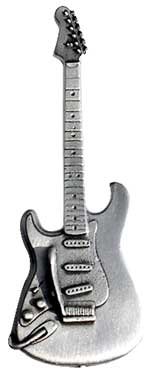
Left Handed Stratocaster Electric Guitar Metal Belt Buckle


With so many choices of guitars on the market, it can be an overwhelming task to pick the right one. Guitars essentially can be broken down into two main, broad categories: electric and acoustic. Acoustic guitars require no amplification and typically are the guitar of choice for many beginning guitarists. Acoustic guitars are a good choice for those learning basic open chords or simple strumming patterns. An acoustic guitar can have steel or nylon strings that are typically much heavier in gauge to those found on an electric guitar. This can make bending strings or playing solo's more challenging until finger strength and stamina are developed. Given the increasing popularity of county, pop, rock, and metal musical styles, many beginning guitarist are opting to buy electric guitars.

This then allows them to focus on learning to play their favorite musical style straight out of the gate. Electric guitars allow for more versatility and excitement due to their pickup configurations and ability to add distortion, reverb, and other effects to its amplified sound. Electric guitars then are increasing becoming the guitar of choice for many beginning guitarists. However, the question still remains, which guitar should a beginner buy? This is a difficult question given the number of quality guitars on the market. However, one of the common mistakes a beginner makes is buying an inexpressive and low-quality guitar. These guitars are often difficult to play, sound thin, and are not built to last. Furthermore, they end up costing more in the long run as one is forced to upgrade as skills increase. This then leaves the person with a low quality used guitar that is difficult sell (this is because inexpensive, low-quality guitars lose their value very quickly). A better, and more cost effective approach then would be to buy a mid-level guitar that holds its value. This adds built in value protection if one ever decides to sell.

The famous Fender Stratocaster, or, Strat for short, is popular guitar for the beginning, intermediate, and advanced player. Its straight-ahead design, durability, versatility, and playability, makes it a perfect guitar for all music styles. Made famous by Jimi Hendrix, Eric Clapton, and Stevie Ray Vaughan, the Stratocaster comes in a variety of configurations and price points for almost every budget. Mid-level Stratocasters range in price from $400-600 depending on where it is made (i.e. America, Mexico, Japan). Buying a used Fender Stratocaster is also an option as Fender guitars are known to sound and play better with age. This is one of the reasons for the increasing popularity of Fender vintage series guitars, such as the Fender Stratocaster 60's reissue and Fender Relic guitars.

The Fender Highway-One series is also a popular choice amongst beginning and intermediate guitarists as it is American made with the playability and tone of a vintage guitar. In summary, those just starting to play guitar are forced with a difficult decision when buying their first guitar. Electric guitars are increasing in popularity especially amongst novice guitarists as they allow for versatility and playability. Many, however, make the mistake of buying an inexpensive, poorly sounding and playing guitar. This then decreases motivation and desire to learn guitar and well and being a poor financial investment. The Fender Stratocaster is a quintessential guitar and one well suited for guitars of all levels that holds its value. There are many Stratocasters to choose from, so do your research and you're sure to find the perfect Fender guitar and in doing so own a piece of music history.

For more information on finding the right Fender Stratocaster please visit: Discount Fender Electric Guitars

Ryan Christianson is a graduate of the Berklee College of Music. He is a Fender guitar fanatic and operates the informational site: http://www.buyguitarscheap.com

the fender stratocaster handbook pdf
Tuesday, 30 December 2008

Everything!

Customer Review: Good stuff
Everything I had hoped for from the Tones and more. Makes you miss the halcyon days in which this lively and innovative music was made. A great job of packaging too - a really solid collection including the pop stuff and the fun oddities.
Customer Review: One of the greatest ever
As much as I love music and all it has to offer, nothing has ever struck and stuck with me like TOT. I owned the POP album on vinyl, and I played it time and time again. Absolutely brilliant! I adore Love and Rockets, and I think Bauhaus are OK (a bit overrated), but this was a true gem. You absolutely must listen to "Rain". Greatest song ever composed in my opinion. I can't stress enough how wonderful this song is. It opens up with ambient organ and guitar (which is e-bowed, a method used throughout their songs), and then it morphs brilliantly into the singing and structure. Lyrically it is stunning, and I tell you the music will just stick with you. Just a beautiful song!


Very talented Contemporary Country artist Vince Gill has released him latest CD titled I Still Believe In You and Wow! It's good.

I Still Believe In You literally grabs your attention right from the start with Don't Let Our Love Start Slippin Away and doesn't let go until the very last note of the very last song I Still Believe In You, which is another great track by the way.

The nice thing about a CD like this is when the talent is this rich even if Contemporary Country isnt your favorite style you still cant help but appreciate the greatness of the artist.

Im of the opinion that I Still Believe In You is certainly Vince Gills best work in a few years. A totally enjoyable CD and an outstanding release. What I call must have music. I give it two thumbs up because its a collection that even the casual Contemporary Country fan can appreciate and enjoy.

While this entire CD is outstanding the truly standout tunes are track 1 - Don't Let Our Love Start Slippin Away, track 6 - One More Last Chance, and track 10 - I Still Believe In You.

My Bonus Pick, and the one that got Sore [...as in "Stuck On REpeat"] is track 9 - Love Never Broke Anyones Heart. What a nice track!

I Still Believe In You Release Notes:

Vince Gill originally released I Still Believe In You on September 1, 1992 on the MCA Nashville label.

CD Track List Follows:

1. Don't Let Our Love Start Slippin' Away

2. No Future In The Past

3. Nothing Like A Woman

4. Tryin' To Get Over You

5. Say Hello

6. One More Last Chance

7. Under These Conditions

8. Pretty Words

9. Love Never Broke Anyone's Heart

10. I Still Believe In You

Personnel: Vince Gill (vocals, guitar); Andrea Zonn (vocals, fiddle); Randy Scruggs (acoustic guitar); Steuart Smith (electric guitar); John Hughey (steel guitar); Steve Nathan (organ); Pete Wasner, John Barlow Jarvis (keyboards); Willie Weeks (bass); Carlos Vega (drums); Vicki Hampton, Bob Bailey, Yvonne Hodges, Kim Fleming, Harry Stinson, Billy Thomas, Dawn Sears (background vocals).

Comcast Deals

fender 50th anniversary stratocaster

Monday, 29 December 2008

Fender '62 Stratocaster 11 Hole Pickguard - Tortosie Shell

Guitar Replacement Pickguard. Made by Fender.

4-Ply, 11 Hole Stratocaster Pickguard for 3 single coil pickups

Fits: '62 American Vintage (U.S.) and 60's (Mexico) Stratocasters. Has truss rod adjustment notch.


Most young people at some stage experiment with playing a musical instrument, for some it's a brief journey, while for others it's a life time of adventure. Many who start to play an instrument learn to play the electric guitar. The popularity of this instrument could be for several reasons, relative cheapness of instruments, abundance of teaching methods, but above all electric guitars have "the cool factor" that inspires many people to take it up and play.

Although essentially the same instrument as an acoustic guitar, the electric versions differ in one fundamental way. The difference being that they require electric powered amplifiers for them to operate successfully. While acoustic guitars rely on the cavity within the body to resonate and create the sound and volume, electric guitars make use of pickups and amplifiers to propel the sound. There are overlaps to this definition, for example Archtops, a class of electric guitar, are manufactured with hollow bodies. This allows for the same acoustic resonance produced by acoustic guitars.

Electric guitars have the ability to offer a very specialized sound compared to that of an acoustic version, this is down to the large range of effects pedals and special effect modules available. Electric guitars, unlike their acoustic counterparts, have a poor sustain, but with effects such as overdrive increased sustain is possible to achieve. Other effects including flanger and distortion give rise to sounds that are very popular with rock bands, as well as with the heavy metal music genre.

They also benefit from not being hindered by the regular design of their acoustic cousins, Electric guitars can be shaped in various different ways, allowing for creative designs like the "Flying V" and more comfortable playing. More traditional designs include the Gibson Les Paul and Fender Stratocaster style, a design most people are familiar with.

The differences aren't just in the body design, compared to acoustic guitars; the strings of an electric guitar are typically thinner. This is due to the fact that they don't really need to resonate as much as the strings in the acoustic versions do. Electric guitar strings are also closer to the guitar's neck, which requires less effort to press them down.

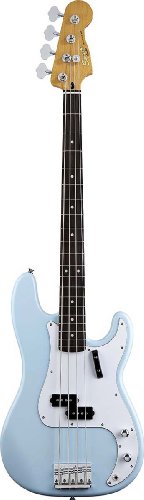
Another class of electrified guitar is the electric bass. This has all the same dynamics, but only has four strings. The strings on an electric bass guitar are considerably thicker compared to the standard gauge of electric guitars; this allows them to play really low notes.

When it comes to learning the guitar most beginners like the idea of playing an electric version as it seems to offer instant fun. Whatever you decide to learn set your budget, get yourself an instrument you feel comfortable with along with some easy to follow guitar tutorials. And most importantly of all, have fun playing.

If you want to find out more about learning to play the guitar using online downloadable videos and guides have a look at learn guitar playing. If you want a bit more information about electric guitars and what's available on the market click on discount electric guitars

fender 40th anniversary stratocaster

Sunday, 28 December 2008

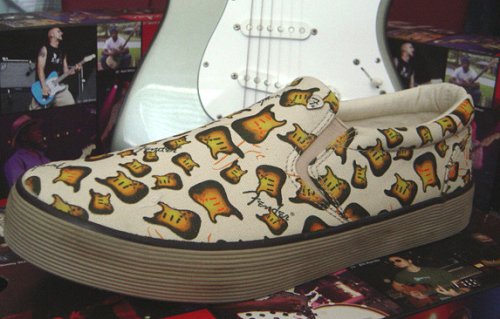
Fender Stratocaster Guitar Gold, Yellow, Brown Mens Sneakers

Authentic Fender Footwear with a splash of stratocasters all over! Slip ons that will add cool to your wardrobe! Show them who really rocks! *Mens sizes*


One of the most popular guitar companies and definitely one of the most influential contributions ever in modern music was the Fender guitar. With the introduction of these solid body electric guitars, basses and amplifiers, Fender helped the smaller bands be heard in bigger venues a lot better than using acoustic instruments. They also helped change the sound of the music and would heavily influence a broad area of genres including Rock, Jazz, Blues and many more.

The inventor of the Fender guitar, Leo Fender, developed a solid-body guitar in 1951 called the Broadcaster. The name was later changed to Telecaster (Tele) and became the first solid-body Spanish style electric guitar to be mass-produced.

Another first in guitar history happened later that same year when Fender introduced the Precision Bass. The Precision Bass was different from the usual basses at the time because they were portable, you can play them like a guitar and they could be amplified. The usual Double Basses (Upright Bass) that were used at this time were hard to transport and often hard to hear over top of other instruments.

A few years later in 1954, Fender came out with the Stratocaster (Strat). Fender went out and asked professional guitarists and Fender staff what they wanted in a guitar so he could improve the Telecaster. Instead, they ended up creating an upscale model to go along with the Tele. Some of the main characteristics of the Strat were the addition of another single coil pickup and a double cutaway body design to make it easier to play notes higher down the neck. Another important addition to the Strat was the tremolo bridge, which was originally made to bend the strings to duplicate the sound of the pedal steel guitar.

Fender also introduced many other models to their lineup over the next decade including the Jaguar, Jazzmaster, and Jazz Bass. Guitars and Basses were not all that Fender produced during this time. They also released the Twin Reverb amp.

Due mainly to Leo Fender's poor health, the company was sold to CBS in 1965. Even though Fender continued to grow with the new owners over the following years, the company realized the importance for management that understood music and musicians. This led to the hiring of William Schultz in 1981.

In 1985, CBS decided to sell off all of their non-broadcast media businesses including Fender. A group of investors and Fender employees purchased the Fender Company and put William Schultz in charge. With the ownership including people that have such a passion for guitars, like the Fender employees, Fender got even better.

1987 marked the year that the Fender Custom Shop opened for the first time. The Fender Custom Shop is located in Corona, California where they make custom guitars for professional guitar players and guitar enthusiasts. This Custom Shop was an obvious move for Fender because they have always understood the importance of listing to their customers and giving them exactly what they want.

Fender still thinks like this today and continue to give their customers the best Fender guitar that they can make. This is why I think that Fender is one of the most famous guitars ever made. Some of the great guitar players that love their Fender guitars are Buddy Guy, Eric Clapton, Eric Johnson, George Harrison, Jeff Beck, Jimi Hendrix, Jimmy Page, John 5, John Lennon, Keith Richards, Pete Townshend, Richie Kotzen, Stevie Ray Vaughn and Yngwie Malmsteen.

"Teach Yourself Guitar The EASY Way" - grab your FREE report that Reveals "How to Avoid the Top 7 Mistakes That Most Beginners Make When Buying a Guitar Learning Product"

http://teach-yourself-guitar.com/freereport

fender stratocaster mim

Fender Stratocaster Guitar Die-Cut Wit & Wisdom Magnet

Paper House Productions combined this top selling image with an inspirational and humorous quote to create a perfect magnet for refrigerators, lockers and file cabinets. Heavy duty magnet perfect for high traffic areas.

"One good thing about music, when it hits you, you feel no pain."

Measures approximately 2.75" x 3.25". Ships in an attractive gift sleeve.


Buying your first guitar is a big step for anybody, but even more for you if you intend to play seriously. Most youngsters get a guitar in their teens, and play around with it for while until the novelty wears off, and then get involved in something else such as the opposite sex, or sports or whatever.

However, a few, and perhaps you are among them, decide to take playing seriously, and for them their first guitar has more meaning. If you are simply purchasing any old guitar so that you have one, then you don't have to spend a lot of money to get a playable instrument. Most people will likely buy a cheap acoustic guitar unless they have enough money to buy an electric guitar and amplifier. However, the point is that if you are not intending to use your guitar as a serious musical instrument, then you need not pay too much for.

If you do, however, then you should pay as much as you can afford because you tend to get what you pay for with guitars. The better makes definitely sound better, so try to save up as much as possible before parting with your cash. You must also decide what kind of guitar you want to play. Is it going to be electric? If so will it be a bass, or specially strung and designed for rhythm or for lead? What kind of tone do you want: the classic electric guitar sound of a Stratocaster or a loosely stringed Gibson to provide a Jimi Hendrix type of sound?

Most people want to play lead, but you won't know if you are cut out for that until you start playing. Even if you are playing lead or rhythm, what kind of music are you involved in? A blues guitar is strung totally different to a rock guitar, and the pick-ups are also different. It can save you money if you know what type of music you want to play, but if not, then that is probably a refinement you won't have to worry about until you are an accomplished player.

If you prefer an acoustic guitar then there are several types available. There is the traditional Spanish guitar than can be used for Flamenco or classical guitar styles, which is stringed in nylon. You should never use steel strings on a classical guitar because you will damage the bridge and the soundboard. There are other acoustic styles suitable for steel strings. Acoustic guitars are suitable fro classical, folk and country music, and are also good for learning before going for an electric guitar. The problem with electric is that you also need an amplifier, so are limited in where you can practice.

In fact, the answer to most of these questions will be that you don't know! You just want a guitar to learn to play on, and in this case a relatively inexpensive acoustic guitar will do fine. You can get a playable instrument for under $100 that is good enough to learn on. You will mostly be working on chords and fingering at the start until you are reasonably competent at strumming along to a tune, and then you can start thinking about more advanced work such as riffs and picking out tunes.

Before buying your first guitar you might also want to check up on the top guitars within your price range. Many budget makes produce low cost copies of some of the great guitars such as the Squire Stratocaster or one on the many Les Paul clones. However, they will not sound like the originals so make sure that you play whatever you intend to buy before parting with your cash.

Nor should you be a shrinking violet when testing the instrument. It matters less if people laugh at your standard of play than if you buy a lemon totally unsuited to your needs simply because you played so quiet that not only could other customers not hear you but you couldn't hear yourself. Play your guitar at the proper volume so that you can hear its tone, and if you don't like it don't buy it. There is no point in buying a guitar you don't like and is going to put you off playing: you might as well buy nothing at all!

These are the main things to consider before buying your first guitar, and if you take all of that into account you should end up with instrument that can do the job you want it to do, while also being suitable for you to learn on. Keep in mind that there will be plenty of time to seek the perfect guitar once you are able to play it properly, and that for now a functional instrument that sounds OK will do you just fine.

Now that you have one, it's time to learn how to play the guitar! You should consider an online video lessons site, and the best one out there is http://www.jamplaynow.com Check out some of their free lessons and you'll see I'm serious!

the fender stratocaster handbook pdf
Wednesday, 24 December 2008

Left Handed Stratocaster Electric Guitar Metal Belt Buckle


For novice guitar players, learning to play chords can seem daunting. Watching skilled guitarists, it seems effortless, but actually doing it yourself may prove a bit more challenging. However, as with anything, regular practice and an understanding of the basics can make guitar chords more accessible than you think. While playing one-string melodies can be a fun way to get accustomed to guitar playing, the true personality and flavor of guitar music relies on chords.

What is a guitar chord? Simply put, a chord is performed by striking two or more strings on a guitar. More specifically, this generally involves playing some combination of fretted and open strings. For instance, the A5 chord is played by holding down the second fret of the D string, and striking both the A and D string together. The A major, on the hand, requires the second frets of the D, G, and B strings to be held down, and all strings except the low E string to be played.

One of the big challenges in playing guitar chords is the need to use several fingers in a relatively cramped space, while putting even pressure on each fret, all while ensuring you only strike the strings you're supposed to. It can be challenging at first, but it does get easier with practice. Some more complex chords require multiple strings to be fretted by the same finger (barre chords), requiring even more finger flexibility. Perhaps the most challenging aspect of chords is the need to quickly and smoothly transition from one chord to the next. Again, experienced players make this look like a cinch, but it does take some getting used to.

To help learn how to finger certain chords, there are many easy-to-follow tools available to the novice player. Guitar chord diagrams may be the easiest to understand when practicing chords. These are basic diagrams that show the basic layout of a guitar neck (vertically), and notate which frets to press and which strings to strike. Guitar tablature (tabs) work in a similar fashion, and show you how to finger the chord while actually playing a song. Here, the neck is shown horizontally as it would appear if the guitar were laying face up on your lap, and numbers on each string indicate which fret should be held. For example, a "1" on the G string would indicated that the 1st fret should be pressed, while a "0" would mean the string should be played open. No number means the string is not played at all.

While learning guitar chords does take some work, it is well worth the effort. Chords give new depth and richness to guitar music that can't be achieved by playing single strings. Look online for resources for learning how to play different chords, such as chord diagrams and guitar tabs. With perserverance, it won't be long until chords come naturally and require almost no effort or extra thought.

TeachYourselfHowToPlayGuitar is an online portal with expert articles about essential guitar tips and guides. To learn more about how to effectively learn to play the guitar, visit http://www.teachyourselfhowtoplayguitar.com for free access.

fender 50th anniversary stratocaster

Thursday, 18 December 2008

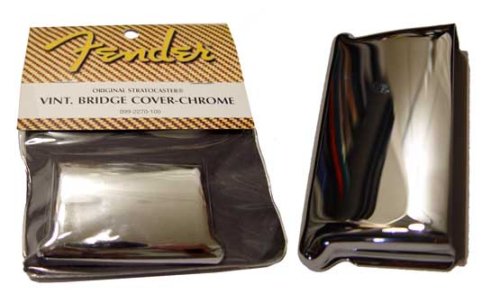
Fender Vintage Stratocaster Guitar Bridge Cover Chrome

no description data


The exceptionally talented Jazz artist John Mclaughlin has released him CD entitled Industrial Zen. I am very confident and happy to announce that I believe John Mclaughlin fans, and Jazz fans alike will be pleased with this one. With the release of Industrial Zen John Mclaughlins artistic excellence is on full display as Mclaughlin has once again delivered a brilliant collection of tracks that could very well be him best work to date.

John Mclaughlin has been a super star in the Jazz genre for quite some time now and Industrial Zen is an excellent illustration as to why.

Jazz music fans will recognize some of the well known contributors on the project including Bill Evans and Gary Husband plus a few other notables as well.

Overall Industrial Zen is an outstanding release. What I call must have music. I give it two thumbs up and is most definitely a worthy addition to any Jazz collection. Truly an outstanding Jazz CD. One of those that is completely void of any wasted time, as each track is simply superb.

While this entire album is outstanding some of my favorites are track 2 - New Blues Old Bruise, track 5 - To Bop Or Not To Be, and track 8 - Mother Nature

My Bonus Pick, and the one that got Sore [...as in "Stuck On REpeat"] is track 1 - For Jaco. What a nice track!

Industrial Zen Release Notes:

John Mclaughlin originally released Industrial Zen on August 1, 2006 on the Verve label.

CD Track List Follows:

1. For Jaco

2. New Blues Old Bruise

3. Wayne's Way

4. Just So Only More So

5. To Bop Or Not To Be (For Michael Brecker)

6. Dear Dalai Lama

7. Senor C.S.

8. Mother Nature

Personnel: John McLaughlin (vocals, guitar, fretless guitar, programming, drum programming); Shankar Mahadevan (vocals); Eric Johnson (guitar); Ada Rovatti, Bill Evans (soprano saxophone, tenor saxophone); Gary Husband (keyboards, drums); Otmaro Ruiz (synthesizer); Hadrien Faraud, Tony Gray, Matthew Garrison (bass guitar); Mark Mondasir, Dennis Chambers, Vinnie Colaiuta (drums); Zakir Hussain (tabla); Marcus Wippersberg (drum programming). Recording information: Metropolis Studios, London, England.

Notebook reviews

aluminium fender stratocaster

Monday, 15 December 2008

Fender '62 Stratocaster 11 Hole Pickguard - Tortosie Shell

Guitar Replacement Pickguard. Made by Fender.

4-Ply, 11 Hole Stratocaster Pickguard for 3 single coil pickups

Fits: '62 American Vintage (U.S.) and 60's (Mexico) Stratocasters. Has truss rod adjustment notch.


Between 1817 and 1823, Ludwig van Beethoven composed Symphony No.9 in D Minor, Opus 125 "Choral." Nestled in the fourth movement of this classical masterpiece is 'Ode to Joy.' It's a composition of exquisite beauty, which to this day continues to give pleasure to listeners of fine music.

Beethoven finalized this masterwork of symphonic construction in 1824. The Ninth Symphony was the last complete symphony he composed.

The Ode to Joy section of the music originates from a work by Friedrich von Schiller. This German poet, playwright, and historian wrote a poem entitled 'Ode to Happiness' in 1785. Beethoven, inspired by this poem, used it as the basis for Ode to Joy as the finale of his great symphony.

Beethoven's attraction to Schiller's poem began in his more youthful days. When he was twenty-two, he had a desire to put music to the poem. In fact, by 1811, some of the text of Ode to Happiness found its way into the sketches for Beethoven's seventh and eighth symphonies.

Beethoven was born in Bonn, Germany in 1770. He was the second-oldest child of Johann van Beethoven, a man of musical background himself. Johann was a court musician and tenor in Bonn's Electoral court. Ludwig followed into music and gave his first piano performance in public at the tender age of eight.

For a short period, Franz Joseph Haydn taught Beethoven. The young Beethoven even had the opportunity to play for Mozart. By 1795 Beethoven's reputation as an excellent pianist was solid. His talents as an improviser were impressive, and he had the gift of composing 'off-the-cuff' with flair.

Beethoven began to notice signs of hearing loss around 1798. In 1801, he wrote a letter to his friend Karl Ameda that stated:

"My greatest faculty, my hearing, is greatly deteriorated."

When his Ninth Symphony premiered on May 7, 1824, he could not hear its performance. This first public performance took place in Vienna's Karntnertorm Theater. Of necessity, Beethoven's deafness required another conductor to direct the symphony orchestra. Beethoven did stand next to this conductor during the performance in order to give tempo directions.

When the performance ended, and the audience erupted with emotion and applause, Beethoven didn't notice. He stood with his back to the audience, facing the orchestra, still regulating tempo. Not until Fraulein Unger, a contralto, had him turn around did Beethoven witness the reception to his masterpiece.

The symphony as a whole is the work of a musical genius who labored over every facet of it. The famous Ode to Joy choral melody involved nose-to-the-grindstone work by Beethoven. It developed over many years draft by draft until he deemed it right. Although written for solo voice and chorus, Beethoven did consider an instrumental only version of the melody.

Through the years, the Ode to Joy has been a source of inspiration to peoples and cultures around the world. During China's Cultural Revolution, it received some distinction as a work that speaks of progressive class struggle.

It was the Ode to Joy that provided musical inspiration in Europe in 1989. That year, after the Berlin Wall came crumbling down, Leonard Bernstein performed the piece in Berlin. It was renamed Ode to Freedom, the word 'freedom' replacing the word 'joy' in the text. This beautiful melody filled the air to celebrate the end of the dividing wall between East and West Germany.

Today the music of Ode to Joy is the official anthem of the European Union. Its German lyrics, however, are not, out of deference to the many languages that make up the Union.

Ode to Joy remains a piece of pure art. It continues to give hope, inspiration, and plain old musical joy to peoples all over the world.

Duane Shinn is the author of the popular DVD home study course on playing piano titled The 52 Week Crash Course In Exciting Piano Playing!

fender highway one stratocaster revie

Sunday, 14 December 2008

Fender Vintage Stratocaster Guitar Bridge Cover Chrome

no description data


Between 1817 and 1823, Ludwig van Beethoven composed Symphony No.9 in D Minor, Opus 125 "Choral." Nestled in the fourth movement of this classical masterpiece is 'Ode to Joy.' It's a composition of exquisite beauty, which to this day continues to give pleasure to listeners of fine music.

Beethoven finalized this masterwork of symphonic construction in 1824. The Ninth Symphony was the last complete symphony he composed.

The Ode to Joy section of the music originates from a work by Friedrich von Schiller. This German poet, playwright, and historian wrote a poem entitled 'Ode to Happiness' in 1785. Beethoven, inspired by this poem, used it as the basis for Ode to Joy as the finale of his great symphony.

Beethoven's attraction to Schiller's poem began in his more youthful days. When he was twenty-two, he had a desire to put music to the poem. In fact, by 1811, some of the text of Ode to Happiness found its way into the sketches for Beethoven's seventh and eighth symphonies.

Beethoven was born in Bonn, Germany in 1770. He was the second-oldest child of Johann van Beethoven, a man of musical background himself. Johann was a court musician and tenor in Bonn's Electoral court. Ludwig followed into music and gave his first piano performance in public at the tender age of eight.

For a short period, Franz Joseph Haydn taught Beethoven. The young Beethoven even had the opportunity to play for Mozart. By 1795 Beethoven's reputation as an excellent pianist was solid. His talents as an improviser were impressive, and he had the gift of composing 'off-the-cuff' with flair.

Beethoven began to notice signs of hearing loss around 1798. In 1801, he wrote a letter to his friend Karl Ameda that stated:

"My greatest faculty, my hearing, is greatly deteriorated."

When his Ninth Symphony premiered on May 7, 1824, he could not hear its performance. This first public performance took place in Vienna's Karntnertorm Theater. Of necessity, Beethoven's deafness required another conductor to direct the symphony orchestra. Beethoven did stand next to this conductor during the performance in order to give tempo directions.

When the performance ended, and the audience erupted with emotion and applause, Beethoven didn't notice. He stood with his back to the audience, facing the orchestra, still regulating tempo. Not until Fraulein Unger, a contralto, had him turn around did Beethoven witness the reception to his masterpiece.

The symphony as a whole is the work of a musical genius who labored over every facet of it. The famous Ode to Joy choral melody involved nose-to-the-grindstone work by Beethoven. It developed over many years draft by draft until he deemed it right. Although written for solo voice and chorus, Beethoven did consider an instrumental only version of the melody.

Through the years, the Ode to Joy has been a source of inspiration to peoples and cultures around the world. During China's Cultural Revolution, it received some distinction as a work that speaks of progressive class struggle.

It was the Ode to Joy that provided musical inspiration in Europe in 1989. That year, after the Berlin Wall came crumbling down, Leonard Bernstein performed the piece in Berlin. It was renamed Ode to Freedom, the word 'freedom' replacing the word 'joy' in the text. This beautiful melody filled the air to celebrate the end of the dividing wall between East and West Germany.

Today the music of Ode to Joy is the official anthem of the European Union. Its German lyrics, however, are not, out of deference to the many languages that make up the Union.

Ode to Joy remains a piece of pure art. It continues to give hope, inspiration, and plain old musical joy to peoples all over the world.

Duane Shinn is the author of the popular DVD home study course on playing piano titled The 52 Week Crash Course In Exciting Piano Playing!

aluminium fender stratocaster

Fender Standard Stratocaster Pickguard - Gold

Guitar Replacement Pickguard. Made by Fender.

One of the really nice things about Fender instruments is that you can change the look of your instrument with relative ease.

One of the easiest ways to accomplish this is to replace the pickguard! Fender offers a variety of pickguards with different pickup configurations and materials to help you add a personal touch to your favorite Fender instrument. This 3-Ply, 11 Hole Pickguard is for 3 single coil pickups.

Fits:

  • American, American Standard, Hot Rod and Deluxe Series Stratocasters (USA)
  • Standard, Deluxe and '70s Stratocasters (Mexico)


There are many types of guitars in the different music stores which are available for every one of all ages. If a person is interested in learning to play the guitar, it is important that he purchase his own guitar. The type of guitar depends upon what type of music he wants to play.

He may choose an electric guitar if he thinks rock music is awesome or he may buy an ordinary guitar if he wants to play acoustic. The ordinary may cost less than the electric guitar which also needs requires an amplifier.

If he prefers an electric guitar, here are some tips on how to choose the right one:

1. A person should be sure about his chosen music as choosing an electric guitar means that he will be in aligned with rock music. He may start small just playing for his own enjoyment, but once he improves with his music he may want his own band that sings and creates their own rock music.

2. It may be tempting to want an expensive guitar that have names suck as Gibson, Les Paul, or the Fender Stratocaster. These guitar brands are very expensive: it is advisable to invest in a cheaper model especially you are still learning to play. More expensive equipment may be purchased later if he is interested in pursuing rock music.

3. He can look for brands like Onyx, Legend, or Orion in the meantime. These are less expensive than the brands mentioned above. As a beginner, one of these electric guitar brands may satisfy a persons craving for rock music. When the time comes that he is a master of the instrument, then that would be the time to upgrade the equipment.

4. A person who does not have enough money to buy one of the cheaper brands even though he is really interested may be able to find a second hand guitar as an option. After all, he is just learning to play the guitar!

5. A buyer needs to keep in mind that acquiring an electric guitar also requires buying an amplifier. He can try to find stores that provide a wholesale package of the guitar with the amplifier.

It is recommended to assess your needs before buying a guitar. A person must know first what type of music he wants to play then buy an instrument to fill that need. The important thing is that he is happy with the guitar he purchased.

Bill McRea is the publisher of Guitar Warehouse the best place to Buy Guitar and learn Guitar Playing Techniques. Both sites offer free lesson and product sales.

fender 50th anniversary stratocaster

Saturday, 13 December 2008

Fender '57 Stratocaster Pickguard - Gold

Guitar Replacement Pickguard. Made by Fender.

One of the really nice things about Fender instruments is that you can change the look of your instrument with relative ease.

One of the easiest ways to accomplish this is to replace the pickguard! Fender offers a variety of pickguards with different pickup configurations and materials to help you add a personal touch to your favorite Fender instrument. This 1-Ply, 8 Hole Pickguard, is for 3 single coil pickups.

Fits:

  • 57 American Vintage, SRV and Eric Clapton Stratocasters (USA) (USA)
  • '50s Stratocasters (Mexico)


One need only observe a crowd of sports fans when a song associated with their favorite team is heard to get an idea of the influence music has on behavior. Whether it is uplifting or downtrodden, the tone of music can and usually does have some effect on the listener.

The rock music scene of the 1990s was at one point strongly influenced by the grunge bands like Nirvana, Pearl Jam, Alice in Chains, etc. As someone who regularly listened to these bands during that time I can tell you I believe these had a considerable effect on my mood. I'm not saying these bands drove me to any physical acts against myself or others, but my mood was definitely changed from this music and its often bleak melodies.

Contrast the woeful sound of grunge with the higher energy sound of music like Ska, Hip Hop, etc and the mood of a listener is affected in a different way. For me, listening to what I would refer to "happy music" really gives a lift and perhaps a little more energy.

I've heard a certain NFL player comment that before a game he likes to listen to really heavy hardcore metal music because it pumps him up for the game. That speaks volumes for what effect music has on behavior. I prefer to listen to high energy music before I will be working on a difficult task because in actively listening to the music my mind is spurred to focus on the task at hand and eliminate any distractions.

One of the interesting things I find about music is its emotional component. A simple pattern of tones can elicit good or bad feelings, high energy or low energy. This does not preclude responsibility for ones actions, however. I do not believe you can solely blame things like a suicide on listening to depressing music. If anything, the music may have simply aggravated a condition that was already present.

Music has a powerful effect on the emotions and mood - it's up to the listener to use that knowledge as they choose.

http://www.musicandband.com is a blog devoted to music, sheet music, bands, downloads, musical instruments and basically everything else that relates to music.

fender 40th anniversary stratocaster

Friday, 12 December 2008

Caffeine Carl & The Buzz Live At The Green Parrot

Blues band from Key West Florida. The tracks are: 1. Intro by Pat "The Hammer" Lanergan Rock with Me, 2. Why Get Up, 3. Shakey Ground, 4. Tell Me, 5. The Sky Is Cryin", 6. Treat Her Right, 7. Midnight Special, 8. Mar had A Little lamb, 9. Mama Don't Like Me, 10. On Your Way Down, 11. Voodoo Chile.


If you have ever recorded a song at home and had little to no knowledge about mic placement and sound engineering, you probably felt like I did 15 years ago whenever I first started recording music. You can record a great sounding cd at home without spending a big budget to produce it.

First of all, your recording platform does make a difference when recording a song at home. I am not saying that you should have thousands of dollars worth of recording equipment but you should have a decent recorder. If you don't, recorders are priced cheaper than ever.

Now you may ask, what is the best platform if I don't already have a recorder or only a little 4 track? This is completely biased, so you may want to ask people at your local music shop as well, but I use computer based recording software. ProTools is actually my personal favorite. I will explain this later in the article.

Once you decide on your recorder or if you already have the recorder, here are a few tips to achieving a great sound from your recording.

Mic Placement

Your microphone should be placed strategically to get the most out of your recording. For instance, if you are recording an acoustic guitar, you should first of be using a condenser "shotgun" mic or two, or combination of shotgun mic+pickup in guitar or even 2 shotgun mics+pickup. The mic or mic should be placed about 5" from the guitar and there are a number of placements for the mic or mics. If you are using two mics, my favorite positioning is aiming both mics at the sound hole at about a 45 degree angle. The mics should be about 4" from the guitar and should have about 1-2" of clearance in between them. One mic should be panned left and one panned right for proper phasing.

There are a couple of ways to record an electric guitar. The first way is by placing a mic in front of your speaker cabinet. If you do this, there also are a number of placements for the microphone. First you can place the mic dead center of 1 speaker with about 1" of clearance from the mic to the cabinet. This is the simplest mic placement there is. The next way is to put the mic about 2-3" off center facing straight into the speaker. This is also a simple strategy and picks up more low end from your cabinet. My musical styles are rock and metal so, if this is what you are recording, the next placement is for you. I will actually angle the mic down at about 45 degrees and place it in the outer top left or right hand corner of the top speaker. This will help you achieve the most out of your amplifier.

The other method of recording the electric guitar is by using line ins. In the event that you do record like this, you are more likely to get electrical hum or interference that can be tricky to remove. But, if you have a good amp modeler and effects, you can feasibly make a good recording without actually using your amplifier.

When doing mic placements of the drums, it is pretty cut and dry. You should place the mics exactly as you would in a live setting. That is, using a good drum mic set, place the kick drum mic in the bass drum, place a mic over your snare and toms. The microphones will pick up the cymbals with no problems so you focus on placing mics on the drums.

Again, whenever recording the bass guitar, it is advisable to place the microphone straight into the speaker off center to the lower left or right. This also helps reproduce the low end of the speaker into the recording.

Last of all, vocals are the most important part of the recording process. You should first of all have a good closet and a condenser microphone or you will get a lot of ambient noise. First the closet should have a modest amount of clothing in it. The clothing will actually work much like sound foam does in the studio and kill the ambience in the room. You will sound a lot different if you record in a room like this as well. If this isn't an option to you, there are microphones available that also kill the ambient noise without sacrificing studio quality, however, they cost about $250.

Scott Daugherty is a performing guitarist and studio engineer. For hot deals on music equipment, visit this store. For free guitar lessons, visit http://superguitartab.com

john mayer fender stratocaster